Blog

  • Alfredo Gaspar Delivers INSS CPMI Report to the STF: 216 Indictments and New Directions in Federal Investigation

    Alfredo Gaspar Delivers INSS CPMI Report to the STF: 216 Indictments and New Directions in Federal Investigation

    Reading Time: 3 minutes

    In a significant development for the oversight of public administration and the fight against social security fraud, Federal Deputy Alfredo Gaspar (PL-AL) formally delivered the final report of the Joint Parliamentary Committee of Inquiry (CPMI) of the INSS to Ministers Luiz Fux and André Mendonça of the Supreme Federal Court (STF). The document, which has more than 4,000 pages, details a complex scheme of irregularities that directly affect the assets of retirees and pensioners throughout the country.

    The Magnitude of the Investigation and the Requests for Indictment

    The report presented by the parliamentarian from Alagoas is not just a compilation of data, but the result of months of rigorous investigations into the operation of the National Social Security Institute (INSS). In all, the text requests the indictment of 216 people, pointing to the practice of serious crimes that compromise the integrity of the Brazilian social security system.

    Among the crimes listed in the extensive document, the following stand out:

    • Qualified fraud: focused on fraud against the social security agency;
    • Criminal Organization: structured for draining public resources;
    • Money Laundering: concealment and disguise of assets originating from illicit schemes;
    • Active and Passive Corruption: involving both public agents and private entities.

    The strategic delivery to the STF ministers aims to ensure that the evidence collected by the CPMI is integrated into the federal investigations already conducted by the Federal Police (PF), under the reporting of Minister André Mendonça.

    Public Figures Under Investigation

    The political impact of the report is accentuated by the inclusion of high-profile names on the national scene. The document cites Fábio Luís Lula da Silva, the current president’s son, for an alleged connection with an individual identified as “Careca do INSS,” a character who appeared repeatedly during the committee’s testimonies and breaches of confidentiality.

    In addition, the investigation was not restricted to the current administration. Alfredo Gaspar included requests for indictment for two former Ministers of Social Security:

    1. Carlos Lupi: current holder of the portfolio in the current government;
    2. José Carlos Oliveira: who held the position in the previous federal administration.

    This temporal scope demonstrates, according to the rapporteur, that the scheme of irregularities in the INSS transcends governments, constituting a structural problem that requires an energetic response from the judicial institutions.

    The Political Scenario and Rejection in the Board

    Despite the robustness of the evidence alleged by the rapporteur, the final report faced political resistance within the CPMI itself. In a close vote, the text was rejected by 19 votes to 12. Political analysts observe that the result was a clear victory for the government base, which sought to shield names linked to the Executive.

    “The delivery of the report represents the fulfillment of duty to the Brazilian people. Even with the political rejection in the board, the facts and evidence are material and are now under the custody of the Supreme Court for due legal process.”

    It is essential to emphasize that the parliamentary rejection of a CPMI report does not invalidate its value as an informative piece for the Judiciary and the Public Prosecutor’s Office. The documentary evidence, the testimonies given under oath, and the technical expertises carried out continue to have legal value to support police investigations and criminal actions.

    The role of the Federal Police and the STF

    With the forwarding of the report to the STF, the information begins to subsidize broader investigations. The Federal Police, which was already monitoring several fronts of the benefit granting system, now has an unprecedented data crossing between the parliamentary and judicial spheres. This movement is vital to dismantle what the deputy described as a “network of pillage” that victimizes the country’s most vulnerable citizens.

    Conclusion: Next Steps and the Defense of Retirees

    The INSS CPMI ended its formal work in March 2026, but its reflections are just beginning. The focus now shifts to the technical and legal judgment of the evidence. For society and for Social Security Law, this episode reinforces the need for constant audits and more rigid corporate governance within the INSS.

    The criminal accountability of those involved, if proven, will serve as an important milestone in the fight against systemic corruption. Meanwhile, the Brazilian judicial system has the challenge of filtering political motivations and focusing on the materiality of the imputed crimes, aiming at the restitution of values and the protection of the rights of Brazilian retirees.

  • Institutional Convergence Towards the End of Premium Retirement for the Judiciary

    Institutional Convergence Towards the End of Premium Retirement for the Judiciary

    Reading Time: 3 minutesReading Time: 3 minutes

    The Brazilian legal landscape is undergoing a profound transformation regarding the disciplinary regime of the judiciary and the Public Prosecutor’s Office. The convergence between recent decisions of the Supreme Federal Court (STF) and the advancement of Constitutional Amendment Proposal (PEC) 3/2024 in the Senate signals the imminent end of the so-called “premium retirement,” an administrative sanction that, in practice, guarantees the maintenance of benefits to members of the Judiciary removed for serious misconduct or crimes.

    The End of the Sanction of Mandatory Retirement and the Understanding of the STF

    Historically, mandatory retirement with benefits proportional to length of service was the maximum penalty applicable to judges and prosecutors in administrative proceedings. However, the understanding of the legality of this measure changed drastically with the interpretation of Constitutional Amendment 103 (Pension Reform of 2019). The debate gained renewed force through a decision by Minister Flávio Dino, within the scope of Ordinary Action 2.870/DF.

    In that judgment, the minister argued that the Pension Reform suppressed the constitutional foundations that allowed the use of retirement as a disciplinary sanction. By removing the term “retirement” from the provisions governing punishments for high-ranking public officials, the derivative constituent would have expressed a clear desire to extinguish such benefit in cases of misconduct. Thus, the maximum penalty would become the definitive loss of office (dismissal), without the granting of lifetime monthly income.

    “As of the effective date of EC 103/2019, there is no constitutional basis for the State to reward with retirement benefits someone who has committed offenses incompatible with the dignity of the judiciary.”

    Analysis of PEC 3/2024: Legislative Rigor and New Rules

    Following the movement of the Judiciary, the Legislative Branch accelerated the processing of PEC 3/2024. Recently approved by the Constitution and Justice Committee (CCJ) of the Senate, the proposal aims to remedy any interpretive gap, expressly prohibiting the granting of retirement as punishment. The text provides for a restructuring of the punitive process to ensure that society does not continue to finance inactivities resulting from crimes or corruption.

    Main Innovations of the Legislative Text

    • Removal and Suspension of Remuneration: Unlike the current model, where the magistrate continues to receive salary during the administrative process, the PEC proposes the immediate suspension of payments immediately after the recognition of the serious offense.
    • Procedural Speed: Establishes a deadline of 30 days for filing the civil action aimed at the loss of office, preventing injunctions or procedural delays from perpetuating the payment of salaries to those under investigation.
    • Termination of the Bond: Dismissal becomes the rule for conduct that previously resulted in paid removal.

    The Impacts on Social Security Law and the Issue of Contributions

    The extinction of mandatory retirement as a sanction raises complex issues in the field of Social Security Law. Magistrates and members of the Public Prosecutor’s Office contribute with high rates, which can reach 14% of their income. Therefore, class associations such as AMB (Brazilian Association of Magistrates) and Ajufe (Association of Federal Judges) express concern about legal certainty and the right of ownership over the contributions made.

    Experts argue that the social security assets accumulated over decades cannot be simply confiscated by the State, under penalty of illicit enrichment of the public administration. One of the legal avenues proposed to balance administrative punishment with social security protection is the migration of contributions. In this model, the amounts paid to the Own Regime (RPPS) would be transferred to the General Regime (RGPS), allowing the punished server to use this time for a future retirement by the INSS, respecting the ceilings and rules common to all citizens.

    The Controversial Exclusion of the Military

    A point of intense controversy during the vote in the CCJ was the exclusion of the military from the text of the PEC. Currently, members of the Armed Forces expelled for crimes can leave their families the so-called “fictitious death pension,” in which the military is considered “dead” for social security purposes, allowing their dependents to continue receiving the benefit.

    The maintenance of this privilege for the military, while tightening the rule for judges and prosecutors, is seen by many jurists as a violation of the principle of equality. Defenders of the measure argue that the family should not be punished for the individual error of the military, an argument that, for critics, could be applied with the same logic to the dependents of magistrates, evidencing a lack of uniformity in the ethical-functional treatment of the State.

    Conclusion: Towards the Moralization of Public Management

    The convergence between the STF and the Senate around PEC 3/2024 reflects a social clamor for greater transparency and justice in public administration. Although the technical challenges regarding the contributory nature of social security and the guarantee of tenure still demand in-depth debates, the trend is the consolidation of a system where the severity of the functional fault is matched with the definitive loss of the prerogatives and benefits of the office.

    The text now goes to a vote in the Senate Plenary and, later, in the Chamber of Deputies. Legal professionals should remain attentive, as final approval will redefine not only administrative sanctions, but also the management of social security liabilities in the Brazilian public sector.

  • Chamber Maintains Retroactive Payments for Fishing Ban Insurance: Understand Fishermen’s Rights in 2026

    Chamber Maintains Retroactive Payments for Fishing Ban Insurance: Understand Fishermen’s Rights in 2026

    Reading Time: 3 minutes

    In a decision of great impact for the national fishing sector, the Chamber of Deputies approved the maintenance of retroactive payments for fishing ban insurance, overturning the changes previously suggested by the Federal Senate. The measure ensures that artisanal fishermen maintain the right to claim amounts related to past periods, consolidating fundamental rules for the subsistence of these workers during the months when commercial fishing is prohibited.

    What is Fishing Ban Insurance and its Legal Relevance

    Fishing ban insurance, formally known as Artisanal Fisherman’s Unemployment Insurance (SDPA), is a social security benefit of an assistance nature, equivalent to a monthly minimum wage. It is paid during the “fishing ban” period, which comprises the months when fishing for certain species is prohibited to ensure reproduction and environmental sustainability.

    For the year 2026, with the minimum wage set at R$ 1,621, the benefit acts as an essential safety net. Legally, the insurance seeks to compensate for the temporary loss of income for workers who live exclusively from artisanal fishing, guaranteeing human dignity and ecological balance, both precepts protected by the Federal Constitution.

    The Legislative Dispute: Chamber vs. Senate

    The processing of the Provisional Measure (MP) that regulates the benefit was marked by intense debates between the two houses of the National Congress. While the Federal Senate sought to restrict certain points to contain the advance of public spending, the Chamber of Deputies, under the leadership of rapporteur Senator Beto Faro (PT-PA) in the special committee, defended flexibility and broader access.

    The Issue of Retroactive Payments

    The most controversial point was the maintenance of retroactive payments. The Senate had voted to exclude this possibility, aiming to limit the immediate fiscal impact. However, the deputies decided to reinstate the original text of the committee, ensuring that fishermen who did not make the request in previous years, but who demonstrably had the right, can request it now.

    “The maintenance of retroactives is a victory for the legal certainty of the artisanal fisherman, who often faces bureaucratic and geographical barriers to access their rights at the exact time of the prohibition.”

    New Registration and Inspection Rules

    In addition to the overdue amounts, the Chamber consolidated other operational rules that directly impact the beneficiary’s daily life:

    • Biometrics and CadÚnico: Biometric registration and registration in the Cadastro Único (CadÚnico) are required. However, it was defined that the income considered in CadÚnico will not be used to limit access to fishing ban insurance, with the specific nature of fishing activity prevailing.
    • Fiscal Documentation: The Chamber overturned the temporal requirement for sending documents. Previously, the government wanted proof of sale of fish for at least six months in the twelve months prior to the fishing ban. Now, only documentation is required, without this rigid time frame.
    • Digital Identification: The authentication system may be mediated by qualified public servants or accredited fishing representative entities, facilitating access for workers with technological difficulties.

    Budgetary Impact and Spending Limit

    To balance public accounts, the approved text establishes a spending ceiling for the year 2026. The total expenditure of the Union with fishing ban insurance cannot exceed the amount of R$ 7.9 billion. It is important to note that this ceiling refers to payments for the current fiscal year, not including the provisions for retroactive payments resumed by the deputies.

    The concern of the opposition in the Senate lies precisely in the possibility of fraud. It is argued that allowing representative entities to manage registrations and that retroactive payments are made without precise estimates may destabilize the public budget earmarked for fishing.

    Next Steps and Final Considerations

    With the approval in the Chamber, the bill for conversion goes to the President of the Republic for sanction. If sanctioned without vetoes, the new rules come into effect immediately, allowing thousands of fishermen to regularize their situation before the Ministry of Fisheries and Aquaculture and the Ministry of Labor and Employment.

    For the artisanal fisherman, the moment is to pay attention to the documentation. The requirement of biometrics and the update in CadÚnico become indispensable. It is recommended that workers seek their colonies or specialized legal advice to ensure that the retroactive request, if applicable, is properly instructed with the necessary proofs of professional activity.

    In conclusion, the Chamber’s decision prioritizes the social protection of the fisherman to the detriment of an immediate fiscal restriction, recognizing the historical difficulties of access of this public to public assistance and social security policies.

  • STF suspends proceedings on equal contribution time for men and women in supplementary pension plans

    STF suspends proceedings on equal contribution time for men and women in supplementary pension plans

    Reading Time: 3 minutes

    The Federal Supreme Court (STF) has just ordered the national suspension of all proceedings discussing the legality of clauses in supplementary pension plans that establish the same contribution time for men and women. The decision, which occurs under the general repercussion procedure, highlights the conflict between formal equality and material justice in the Brazilian private pension system.

    The Decisive Framework: General Repercussion Theme 1.423

    The decision was consolidated in the judgment of Extraordinary Appeal (RE) No. 1,415,115. By recognizing the existence of general repercussion to the matter, now cataloged as Theme 1.423, the STF signals that the resolution of this conflict will not only impact the parties involved in the original process, but thousands of pension fund beneficiaries across the country.

    The rapporteur of the case, Minister Alexandre de Moraes, emphasized the need to halt the ongoing actions in the lower courts. This national suspension is a strategic procedural tool to prevent different courts from issuing conflicting decisions, which could generate extreme legal uncertainty for supplementary pension entities and their participants.

    The Controversy: Equality of Time vs. Social Reality

    The core of the dispute lies in pension fund regulations that require 30 years of full contribution for both men and women. The plaintiffs argue that applying a “one-size-fits-all” rule for both genders ignores the historical and structural disparities of Brazilian society.

    Historically, the General Social Security Regime (RGPS/INSS) and the Special Regime (RPPS) adopt differentiated criteria. This differentiation is based on widely documented sociological and economic assumptions:

    • Double workload: The recognition that women still assume the greater burden of domestic and family care.
    • Wage inequality: IBGE data proving that women, on average, earn less than men in the same roles.
    • Barriers in the labor market: The penalization of maternity in career progression.

    The Logic of Distortion in Supplementary Plans

    One of the most sensitive points of the discussion refers to the nature of “supplementation”. If women retire with reduced time in the INSS, but the supplementary plan requires 30 years for the maximum benefit, there is a financial mismatch. Many women have to choose between continuing to work only to reach the private pension goal or retiring through the INSS and receiving a reduced (proportional) supplementary allowance.

    “The application of an identical contribution time criterion in supplementary systems can, paradoxically, deepen the inequality that the public pension system tries to mitigate, punishing women for a rule that does not observe their structural vulnerability.”

    Formal Equality vs. Material Equality

    The judgment in the STF should revisit fundamental concepts of Constitutional Law:

    1. Formal Equality

    From this perspective, everyone is equal before the law and should be subject to the same rules. Supplementary pension entities often argue that, because they are voluntary and based on rigorous actuarial calculations, they should not suffer the same interference from social policies as the public regime.

    2. Material (Substantial) Equality

    This concept argues that the Law must treat the unequal to the extent of their inequality. Treating people who face different realities in the labor market in the same way would, ultimately, consolidate an injustice.

    Actuarial and Financial Impacts

    Private pension entities express concern about the actuarial balance of the plans. If the STF decides that the contribution time for women should be less, the calculations of mathematical reserves and monthly contributions may need to be revised. This could increase the cost of the plans or require extraordinary contributions from sponsors and participants.

    On the other hand, participants argue that the financial sustainability of the fund cannot be maintained at the expense of violating fundamental rights and constitutional principles of equality.

    What to expect for the future of the proceedings?

    With the national suspension in effect, all proceedings in the Brazilian Judiciary on this issue will be halted until the STF Plenary issues a final decision. There is no exact date for this judgment, but given the nature of the general repercussion, the fixed thesis must be followed by all judges and courts in the country.

    Conclusion

    The outcome of Theme 1.423 will be a watershed for Brazilian Pension Law. It will define whether the autonomy of closed supplementary pension entities has limits before the principle of gender equality. While we await the decision, the recommendation for beneficiaries and lawyers is to rigorously monitor the procedural updates, as any retroactive or modulated decision may drastically alter the retirement planning of thousands of Brazilian women.

  • IA Berna and the Fight Against Abusive Litigation: Innovation at the CNJ through the Justice 4.0 Program

    IA Berna and the Fight Against Abusive Litigation: Innovation at the CNJ through the Justice 4.0 Program

    Reading Time: 3 minutesReading Time: 3 minutes

    IA Berna and the Fight Against Abusive Litigation: Innovation at the CNJ | Justice 4.0

    The Brazilian legal landscape is undergoing an unprecedented transformation with the integration of disruptive technologies into the daily operations of the courts. The National Council of Justice (CNJ), through the “Conecta” webinar, recently presented Berna, a cutting-edge artificial intelligence developed by the Court of Justice of Goiás (TJGO). This tool is not just a technical advancement, but a strategic response to the critical challenge of abusive litigation, which overburdens the judicial system and compromises procedural efficiency throughout the country.

    The Challenge of Abusive Litigation in the Brazilian Judiciary

    Abusive litigation frequently manifests itself through the filing of mass claims, often based on weak or repetitive legal arguments, with the intent of congesting the courts and forcing settlements or favorable decisions by volume. This phenomenon generates an immense operational cost for the State and harms citizens seeking the resolution of legitimate disputes. The introduction of Berna emerges as an institutional defense mechanism, using technology to identify patterns and behaviors that characterize this abuse of the right of action.

    The tool uses Recursive Electronic Search using Natural Language to analyze petitions and processes on a scale humanly impossible. By automating the recognition of these claims, the AI allows the Judiciary to act preventively and assertively, ensuring that public resources and magistrates’ time are directed to where justice is truly needed.

    “Artificial intelligence does not replace human judgment, but enhances it. Tools like Berna are essential to filter out the noise of predatory litigation and allow Justice to focus on its essential mission of social pacification.” – [Source: CNJ] [1]

    Berna’s Architecture: Technology and Efficiency

    Developed with a focus on usability and precision, Berna was designed to be integrated into the workflow of the courts without generating friction. Its main technical capabilities include:

    • Natural Language Processing (NLP): Ability to interpret complex legal texts and identify similar arguments in different processes.
    • Pattern Identification: Mapping recurring behaviors of litigants and lawyers that may indicate abusive practices.
    • Triage Automation: Streamlining the process of classifying claims, reducing the court’s initial response time.
    • Interoperability: Ease of integration with the electronic process systems already existing in the various Brazilian courts.

    The Role of the Justice 4.0 Program and the Conecta Initiative

    The expansion of Berna to all courts in Brazil is a milestone of the Conecta initiative, which is part of the ambitious Justice 4.0 Program. This program, the result of a partnership between the CNJ and the United Nations Development Programme (UNDP), aims to modernize the Judiciary through collaborative innovation. Conecta functions as a technological incubator, where successful solutions created by a local court, such as the TJGO, are improved and shared with the entire national network.

    This “institutional cooperation” approach prevents each court from spending resources developing solutions from scratch for common problems. In addition to Berna, the program has already made other tools available, such as ApoIA, consolidating an intelligence network that strengthens the technological sovereignty of the Brazilian Judiciary.

    Expected Impacts for the Future of Justice

    The large-scale implementation of AIs like Berna promises to transform the dynamics of the courts in the coming years. Among the expected benefits are:

    1. Reduction of the Case Load: Faster identification and resolution of repetitive claims.
    2. Greater Legal Certainty: Standardization of understandings on similar cases identified by the AI.
    3. Resource Optimization: Reduction of operational costs and better allocation of human capital.
    4. Access to Justice: A more agile system directly benefits the average citizen, reducing the waiting time for a judgment.

    Conclusion and Strategic Relevance

    The journey towards Justice 4.0 is a path of no return. The webinar held on March 19, 2026 was not just a technical presentation, but a call to action for all members of the Judiciary to embrace innovation. Berna symbolizes a new era where technology and law go hand in hand to combat abuses and ensure that the scales of justice remain balanced and efficient for all Brazilians.

    References

  • Federal Government Must Initiate Administrative Proceeding to Settle Debt with Judicial Credit

    Federal Government Must Initiate Administrative Proceeding to Settle Debt with Judicial Credit

    Reading Time: 3 minutesReading Time: 3 minutes

    The Federal Court of Presidente Prudente issued a landmark decision reinforcing the right of taxpayers to use judicial credits, with res judicata, to settle tax debts installment payments with the Federal Government. The ruling obligates the public administration to initiate the necessary administrative procedure for the so-called “offsetting of accounts,” a mechanism guaranteed by the Federal Constitution that often faces resistance or omission by the tax authorities.

    The Constitutional Basis for Offsetting Accounts

    The legal basis for using judicial credits to settle debts with the Public Treasury is firmly anchored in the Federal Constitution. Article 100, §11, introduced by recent constitutional amendments, clearly establishes the subjective right of the creditor to use amounts owed to them by the public entity to amortize or liquidate their own tax debts.

    This provision aims to give effect to the principle of morality and administrative efficiency, preventing the taxpayer from being forced to continue disbursing funds to pay the State while the same State owes them amounts already recognized judicially. In the case in question, it is a direct application of the constitutional norm to guarantee balance in the relationship between the tax authorities and the taxpayer.

    The Federal Government’s Inertia and the Recognition of Illegality

    In the process under analysis, the plaintiff company possessed judicial credits arising from an action with res judicata and sought to use them to settle an active tax installment payment exceeding R$ 200,000. However, despite the administrative request filed, the Federal Government remained inert, failing to initiate the technical analysis procedure provided for in the legislation.

    Judge Newton José Falcão, of the 2nd Federal Court of Presidente Prudente, emphasized that the administrative omission has no legal basis. According to the judge, the existence of decrees and ordinances regulating the matter removes any argument of a “normative vacuum” that the Federal Government could allege to avoid proceeding with the compensation.

    “The constitutional provision expressly enshrines the subjective right of the creditor of a judicial credit with res judicata to use it, through offsetting of accounts, to settle debts installment payments with the Public Treasury.”

    Risk of Damage and the Need for Preliminary Injunction

    One of the crucial points of the decision was the recognition of periculum in mora (danger in delay). The judge pointed out that the maintenance of monthly charges forced the company to an unnecessary patrimonial disbursement, since it holds sufficient credits for the total liquidation of the debt.

    To justify the granting of the preliminary injunction, the following factors were considered:

    • Undue Disbursement: Each installment paid under resistance represents an immediate loss of liquidity for the company.
    • Guarantee of the Court: The company presented surety bonds in an amount greater than the debt, ensuring that the public treasury would not suffer losses if the decision were reversed.
    • Difficulty of Reversal: Amounts paid to the tax authorities are difficult to recover immediately, often requiring new writs of payment.

    Implications of the Decision for the Taxpayer

    The judicial decision not only orders the opening of the administrative process, but imposes coercive measures to ensure the practical result of the right. Among the determinations imposed on the Federal Government, the following stand out:

    1. 15-day Deadline: For the effective initiation of the administrative process of offsetting accounts.
    2. Suspension of Enforceability: The installments of the tax debt are suspended for the duration of the administrative analysis.
    3. Positive Certificate with Negative Effect (CPEN): Authorization for the issuance of the document, allowing the company to continue participating in bids and contracts.
    4. Daily Fine: Setting of astreintes in the amount of R$ 500.00 in case of non-compliance with judicial orders.

    Conclusion and Legal Relevance

    This case serves as an important precedent for companies that find themselves in a similar situation. The use of writ of payment credits or judgments with res judicata to offset tax debts is a legitimate fiscal liability management strategy and now strengthened by judicial understanding.

    It is essential that the taxpayer be advised by qualified professionals to identify the liquidity and certainty of these credits, as well as to manage the appropriate legal remedies in the face of eventual inertia of the public administration. Justice reaffirms that the State cannot fail to fulfill its constitutional obligations under the pretext of administrative convenience.

  • Geap Complies with Court Order and Issues New Bills with Corrected Values for Servers

    Geap Complies with Court Order and Issues New Bills with Corrected Values for Servers

    Reading Time: 3 minutes

    In a significant legal victory for public servants, Geap Autogestão em Saúde has begun sending out new bank slips with corrected values, in strict compliance with a court order. This measure benefits thousands of servers who were surprised by a duplicated charge, known as the “second readjustment,” applied irregularly after the already planned annual increase.

    Understanding the Case: The “Second Readjustment” by Geap

    The controversy surrounding Geap’s monthly fees gained momentum in mid-2025. After the application of the regular annual readjustment, the self-management operator implemented a second increase in values in June of the same year. This practice was promptly questioned by class entities, led by the National Federation of Unions of Workers in Health, Labor, Social Security and Social Assistance (Fenasps), which alleged the illegality and abusive nature of the cumulative charge.

    The court, when analyzing the request, granted an injunction through the Court of Justice of the Federal District (TJDF), suspending the effects of the internal resolution that authorized this additional increase. With the decision, the values must return to the levels established by Resolution nº 913/2025, which provides only for the ordinary annual readjustment according to the plan and the beneficiary’s age group.

    New Bills and Payment Deadlines

    Federal public servers linked to Geap began receiving the updated collection documents in the first week of April. It is essential that the beneficiary pays attention to the operator’s official communication channels to ensure access to the correct bill.

    • Due Date: The deadline for payment of the new bills was set for April 15, 2026.
    • Content: The value must be free from the portion referring to the “second readjustment.”
    • Issuance: If the physical bill does not arrive on time, the recommendation is to use the beneficiary portal or the official Geap application.

    The Return of Improperly Charged Amounts

    One of the most sensitive points of the judicial decision concerns the amounts that have already been paid by servers in previous months under the validity of the suspended readjustment. According to information from Fenasps, Geap has committed to refunding these amounts in April.

    The restitution will be operationalized in two main ways, depending on the payment method used by the server:

    1. Payroll Deduction (Consignment)

    For servers who have direct deductions from their paychecks, Geap has informed that it will correct the values at the time of sending the information to the Federal Government’s payroll. The excess amounts previously charged must be credited directly to the beneficiary’s current account.

    2. Payment via Bank Slip

    Those who make payments via bank slip and have already paid installments with the undue readjustment must monitor their payment statements. The operator must carry out the reconciliation of accounts or the specific reimbursement, as agreed with the union entities.

    “The suspension of this abusive readjustment is essential to preserve the purchasing power of the server and ensure that access to health does not become an unpayable burden in the face of the category’s salary lag.”

    What to Do in Case of Doubts or Errors?

    Despite the issuance of the new bills, Fenasps warns that occasional inconsistencies may occur, such as differences in values between servers of the same age group and with the same plan. To resolve these pending issues, the server must act proactively.

    It is recommended that the active, retired or pensioned server who identifies errors in the billing gathers the following documentation:

    1. Copy of the bill or proof of payment for the month of March (containing the error);
    2. Copy of the new bill received in April;
    3. Recent pay stubs indicating the health plan item.

    These documents must be sent to the state union of the category or directly to Fenasps. The federation is consolidating these cases to report directly to the operator and monitor full compliance with the court order.

    Future Perspectives: Dialogue with the Government

    In addition to the legal dispute, the representative entities are seeking a political and administrative solution to prevent episodes of unexpected charges from recurring. A request has been filed with the Ministry of Management and Innovation in Public Services (MGI) for direct participation of unions in the negotiation process for agreements and adjustments of health plans.

    The objective is to guarantee greater transparency in Geap’s decisions, since it is a self-management operator whose main maintainers are the servers themselves and the Federal Government. The democratization of decisions on cost-sharing is seen by the entities as the only way to sustain the plan without harming the budget of workers’ families.

    Conclusion

    The issuance of the rectified bills represents a significant advance, but continuous monitoring is essential. Servers must carefully check their values and not hesitate to seek legal or union support if the injunction is not being applied correctly in their individual case.

  • Government Allies Take Alternative INSS CPI Report to the STF, Accusing Consolidation of Scheme in Bolsonaro Government

    Government Allies Take Alternative INSS CPI Report to the STF, Accusing Consolidation of Scheme in Bolsonaro Government

    Reading Time: 4 minutes

    Government Allies Submit Alternative INSS CPI Report to the STF

    In a significant move in the Brazilian political and legal landscape, congressmen from the allied base of President Luiz Inácio Lula da Silva (PT) presented on Wednesday, April 8, 2026, an alternative report from the Joint Parliamentary Inquiry Committee (CPMI) of the National Institute of Social Security (INSS) to Minister André Mendonça, of the Supreme Federal Court (STF). This act reinforces the accusations that a complex corruption scheme involving the embezzlement of pensions would have been consolidated and expanded during the administration of former President Jair Bolsonaro (PL).

    Context of the INSS CPMI

    The INSS CPMI was established with the aim of thoroughly investigating and analyzing the pension embezzlement scheme, a chronic problem that affects millions of Brazilians and generates substantial financial losses for Social Security. The original rapporteur of the committee was Deputy Alfredo Gaspar (PL-AL). Throughout its investigations, the committee had already forwarded to the STF a request for preventive detention for 21 individuals involved in the illicit acts. The accusations against these investigated parties cover serious crimes such as passive corruption, criminal organization, and money laundering, elements that demonstrate the complexity and depth of the social security fraud.

    The Alternative Report and Its Accusations

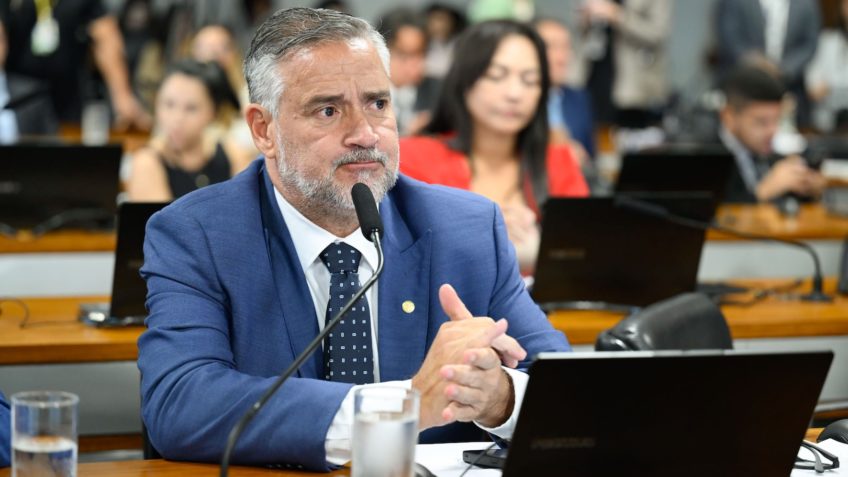
    The alternative report, which was not formally debated and voted on in the committee, was prepared by the government caucus and largely led by Deputy Paulo Pimenta (PT-RS) and Deputy Rogério Correia (PT-MG). In a video released on social media, Deputy Pimenta detailed the main points of the document. According to him:

    • The report calls for the indictment of 130 people.
    • Requests the investigation of another 71 people.
    • The document has also been forwarded to members of the Federal Police (PF), indicating the intention to drive autonomous criminal investigations.
    • Pimenta stated categorically that the report “demonstrated with evidence that this criminal scheme would never have happened if it had not found the facilities and complicity that occurred within the government of Jair Bolsonaro [PL].”
    • He further emphasized that the embezzled money is being returned, with millions already reimbursed, and promised that “this gang led by former President Jair Bolsonaro will never have the chance to commit these crimes against Brazilian men and women again.”

    The Political Maneuver and the Proposed Indictments

    The presentation of this parallel report by members of the Workers’ Party (PT) on March 27 was a deliberate political maneuver to obstruct the voting of the CPMI’s official report. The alternative text, headed by Deputy Rogério Correia, aimed not only to deepen investigations but also to significantly expand the list of investigated parties to approximately 201 names. More than that, the document focused its “political artillery” on prominent opposition figures, such as Senator Flávio Bolsonaro (PL-RJ).

    According to the PT’s position, there was a “political decision” on the part of the CPMI’s presidency to disregard the evidence presented in the alternative report. The party argues that its report contained a wide range of data and documents that would prove not only the beginning of the corruption scheme in 2017 but, crucially, its consolidation and expansion during the Bolsonaro administration.

    Among the most notorious indictments proposed by the PT in the alternative report is that of former President Jair Bolsonaro, who is pointed out as the “mastermind” behind an alleged scheme. The objective of this scheme, according to government allies, would be to finance electoral campaigns of political allies, including former Minister of Social Security Onyx Lorenzoni (PP-RS) and the current Governor of São Paulo, Tarcísio de Freitas (Republicanos). Senator Flávio Bolsonaro, son of the former president and then pre-candidate for the Presidency, also appears on the list of indictments on suspicion of money laundering.

    Significance and Next Steps

    The delivery of this alternative report to the STF marks an important point in the political and legal dispute surrounding the INSS CPMI. By not having its content voted on and recognized by the committee, the government caucus opted for a judicialization strategy, seeking that the allegations and evidence gathered be examined directly by the highest court in the country and the Federal Police. This movement may generate significant developments, potentially leading to new investigations and criminal proceedings against the figures mentioned.

    The action of the government allies reflects the existing political polarization in the National Congress and the persistent tension between the current government and the opposition. The qualification of Jair Bolsonaro as the “mastermind” of the scheme and the direct accusations against other names of his administration indicate the intention to link the failures in Social Security to an alleged criminal orchestration at the top of the previous government. This type of political-legal confrontation is common in contexts of high polarization, where the results of parliamentary investigations frequently turn into tools of dispute between the different spheres of power.

    The actions of Minister André Mendonça will be crucial to determine the future of the alternative report. He will have the responsibility of analyzing the documentation presented and deciding on the next steps, which may include forwarding it to the Attorney General’s Office (PGR) for eventual opening of inquiries or deepening of existing investigations.

    Impact for Citizens

    For the common citizen, especially INSS retirees, the CPI and its developments represent a hope for justice and recovery of embezzled values. The promise of returning the millions already reimbursed, as mentioned by Deputy Pimenta, is a positive point, but the total extent of the damages and the accountability of the true culprits are still awaited with great expectation. The integrity of the social security system, which guarantees the subsistence of millions of Brazilians, is at stake, and the transparency and effectiveness of the investigations are fundamental to restore public confidence.

    We will follow the next chapters of this complex case, which mixes politics, corruption, and the social rights of retirees and pensioners.