Category: Politics

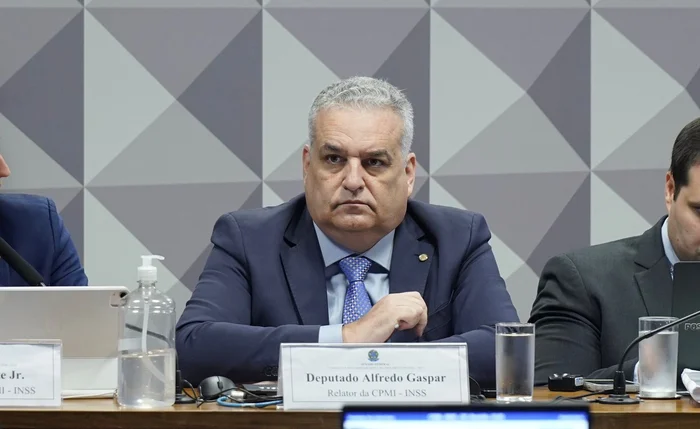
  • Alfredo Gaspar Delivers INSS CPMI Report to the STF: 216 Indictments and New Directions in Federal Investigation

    Alfredo Gaspar Delivers INSS CPMI Report to the STF: 216 Indictments and New Directions in Federal Investigation

    Reading Time: 3 minutes

    In a significant development for the oversight of public administration and the fight against social security fraud, Federal Deputy Alfredo Gaspar (PL-AL) formally delivered the final report of the Joint Parliamentary Committee of Inquiry (CPMI) of the INSS to Ministers Luiz Fux and André Mendonça of the Supreme Federal Court (STF). The document, which has more than 4,000 pages, details a complex scheme of irregularities that directly affect the assets of retirees and pensioners throughout the country.

    The Magnitude of the Investigation and the Requests for Indictment

    The report presented by the parliamentarian from Alagoas is not just a compilation of data, but the result of months of rigorous investigations into the operation of the National Social Security Institute (INSS). In all, the text requests the indictment of 216 people, pointing to the practice of serious crimes that compromise the integrity of the Brazilian social security system.

    Among the crimes listed in the extensive document, the following stand out:

    • Qualified fraud: focused on fraud against the social security agency;
    • Criminal Organization: structured for draining public resources;
    • Money Laundering: concealment and disguise of assets originating from illicit schemes;
    • Active and Passive Corruption: involving both public agents and private entities.

    The strategic delivery to the STF ministers aims to ensure that the evidence collected by the CPMI is integrated into the federal investigations already conducted by the Federal Police (PF), under the reporting of Minister André Mendonça.

    Public Figures Under Investigation

    The political impact of the report is accentuated by the inclusion of high-profile names on the national scene. The document cites Fábio Luís Lula da Silva, the current president’s son, for an alleged connection with an individual identified as “Careca do INSS,” a character who appeared repeatedly during the committee’s testimonies and breaches of confidentiality.

    In addition, the investigation was not restricted to the current administration. Alfredo Gaspar included requests for indictment for two former Ministers of Social Security:

    1. Carlos Lupi: current holder of the portfolio in the current government;
    2. José Carlos Oliveira: who held the position in the previous federal administration.

    This temporal scope demonstrates, according to the rapporteur, that the scheme of irregularities in the INSS transcends governments, constituting a structural problem that requires an energetic response from the judicial institutions.

    The Political Scenario and Rejection in the Board

    Despite the robustness of the evidence alleged by the rapporteur, the final report faced political resistance within the CPMI itself. In a close vote, the text was rejected by 19 votes to 12. Political analysts observe that the result was a clear victory for the government base, which sought to shield names linked to the Executive.

    “The delivery of the report represents the fulfillment of duty to the Brazilian people. Even with the political rejection in the board, the facts and evidence are material and are now under the custody of the Supreme Court for due legal process.”

    It is essential to emphasize that the parliamentary rejection of a CPMI report does not invalidate its value as an informative piece for the Judiciary and the Public Prosecutor’s Office. The documentary evidence, the testimonies given under oath, and the technical expertises carried out continue to have legal value to support police investigations and criminal actions.

    The role of the Federal Police and the STF

    With the forwarding of the report to the STF, the information begins to subsidize broader investigations. The Federal Police, which was already monitoring several fronts of the benefit granting system, now has an unprecedented data crossing between the parliamentary and judicial spheres. This movement is vital to dismantle what the deputy described as a “network of pillage” that victimizes the country’s most vulnerable citizens.

    Conclusion: Next Steps and the Defense of Retirees

    The INSS CPMI ended its formal work in March 2026, but its reflections are just beginning. The focus now shifts to the technical and legal judgment of the evidence. For society and for Social Security Law, this episode reinforces the need for constant audits and more rigid corporate governance within the INSS.

    The criminal accountability of those involved, if proven, will serve as an important milestone in the fight against systemic corruption. Meanwhile, the Brazilian judicial system has the challenge of filtering political motivations and focusing on the materiality of the imputed crimes, aiming at the restitution of values and the protection of the rights of Brazilian retirees.

  • Institutional Convergence Towards the End of Premium Retirement for the Judiciary

    Institutional Convergence Towards the End of Premium Retirement for the Judiciary

    Reading Time: 3 minutesReading Time: 3 minutes

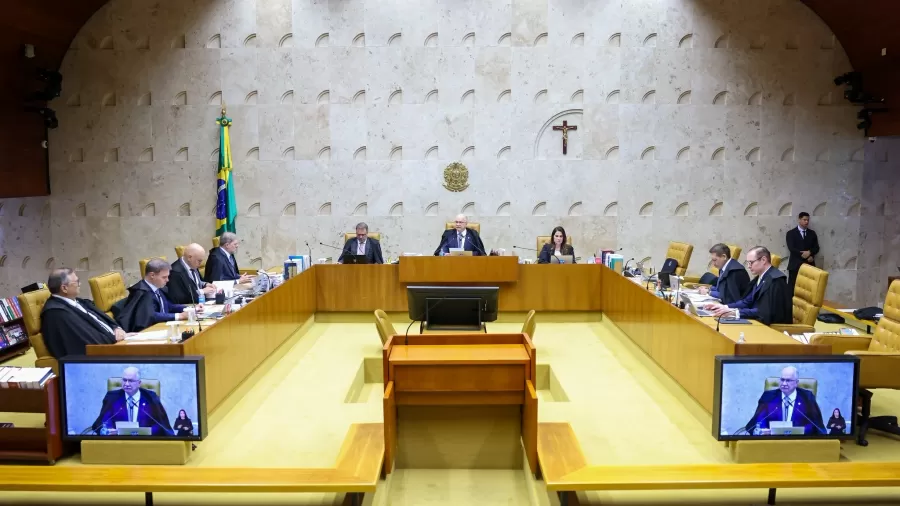
    The Brazilian legal landscape is undergoing a profound transformation regarding the disciplinary regime of the judiciary and the Public Prosecutor’s Office. The convergence between recent decisions of the Supreme Federal Court (STF) and the advancement of Constitutional Amendment Proposal (PEC) 3/2024 in the Senate signals the imminent end of the so-called “premium retirement,” an administrative sanction that, in practice, guarantees the maintenance of benefits to members of the Judiciary removed for serious misconduct or crimes.

    The End of the Sanction of Mandatory Retirement and the Understanding of the STF

    Historically, mandatory retirement with benefits proportional to length of service was the maximum penalty applicable to judges and prosecutors in administrative proceedings. However, the understanding of the legality of this measure changed drastically with the interpretation of Constitutional Amendment 103 (Pension Reform of 2019). The debate gained renewed force through a decision by Minister Flávio Dino, within the scope of Ordinary Action 2.870/DF.

    In that judgment, the minister argued that the Pension Reform suppressed the constitutional foundations that allowed the use of retirement as a disciplinary sanction. By removing the term “retirement” from the provisions governing punishments for high-ranking public officials, the derivative constituent would have expressed a clear desire to extinguish such benefit in cases of misconduct. Thus, the maximum penalty would become the definitive loss of office (dismissal), without the granting of lifetime monthly income.

    “As of the effective date of EC 103/2019, there is no constitutional basis for the State to reward with retirement benefits someone who has committed offenses incompatible with the dignity of the judiciary.”

    Analysis of PEC 3/2024: Legislative Rigor and New Rules

    Following the movement of the Judiciary, the Legislative Branch accelerated the processing of PEC 3/2024. Recently approved by the Constitution and Justice Committee (CCJ) of the Senate, the proposal aims to remedy any interpretive gap, expressly prohibiting the granting of retirement as punishment. The text provides for a restructuring of the punitive process to ensure that society does not continue to finance inactivities resulting from crimes or corruption.

    Main Innovations of the Legislative Text

    • Removal and Suspension of Remuneration: Unlike the current model, where the magistrate continues to receive salary during the administrative process, the PEC proposes the immediate suspension of payments immediately after the recognition of the serious offense.
    • Procedural Speed: Establishes a deadline of 30 days for filing the civil action aimed at the loss of office, preventing injunctions or procedural delays from perpetuating the payment of salaries to those under investigation.
    • Termination of the Bond: Dismissal becomes the rule for conduct that previously resulted in paid removal.

    The Impacts on Social Security Law and the Issue of Contributions

    The extinction of mandatory retirement as a sanction raises complex issues in the field of Social Security Law. Magistrates and members of the Public Prosecutor’s Office contribute with high rates, which can reach 14% of their income. Therefore, class associations such as AMB (Brazilian Association of Magistrates) and Ajufe (Association of Federal Judges) express concern about legal certainty and the right of ownership over the contributions made.

    Experts argue that the social security assets accumulated over decades cannot be simply confiscated by the State, under penalty of illicit enrichment of the public administration. One of the legal avenues proposed to balance administrative punishment with social security protection is the migration of contributions. In this model, the amounts paid to the Own Regime (RPPS) would be transferred to the General Regime (RGPS), allowing the punished server to use this time for a future retirement by the INSS, respecting the ceilings and rules common to all citizens.

    The Controversial Exclusion of the Military

    A point of intense controversy during the vote in the CCJ was the exclusion of the military from the text of the PEC. Currently, members of the Armed Forces expelled for crimes can leave their families the so-called “fictitious death pension,” in which the military is considered “dead” for social security purposes, allowing their dependents to continue receiving the benefit.

    The maintenance of this privilege for the military, while tightening the rule for judges and prosecutors, is seen by many jurists as a violation of the principle of equality. Defenders of the measure argue that the family should not be punished for the individual error of the military, an argument that, for critics, could be applied with the same logic to the dependents of magistrates, evidencing a lack of uniformity in the ethical-functional treatment of the State.

    Conclusion: Towards the Moralization of Public Management

    The convergence between the STF and the Senate around PEC 3/2024 reflects a social clamor for greater transparency and justice in public administration. Although the technical challenges regarding the contributory nature of social security and the guarantee of tenure still demand in-depth debates, the trend is the consolidation of a system where the severity of the functional fault is matched with the definitive loss of the prerogatives and benefits of the office.

    The text now goes to a vote in the Senate Plenary and, later, in the Chamber of Deputies. Legal professionals should remain attentive, as final approval will redefine not only administrative sanctions, but also the management of social security liabilities in the Brazilian public sector.

  • Government Allies Take Alternative INSS CPI Report to the STF, Accusing Consolidation of Scheme in Bolsonaro Government

    Government Allies Take Alternative INSS CPI Report to the STF, Accusing Consolidation of Scheme in Bolsonaro Government

    Reading Time: 4 minutes

    Government Allies Submit Alternative INSS CPI Report to the STF

    In a significant move in the Brazilian political and legal landscape, congressmen from the allied base of President Luiz Inácio Lula da Silva (PT) presented on Wednesday, April 8, 2026, an alternative report from the Joint Parliamentary Inquiry Committee (CPMI) of the National Institute of Social Security (INSS) to Minister André Mendonça, of the Supreme Federal Court (STF). This act reinforces the accusations that a complex corruption scheme involving the embezzlement of pensions would have been consolidated and expanded during the administration of former President Jair Bolsonaro (PL).

    Context of the INSS CPMI

    The INSS CPMI was established with the aim of thoroughly investigating and analyzing the pension embezzlement scheme, a chronic problem that affects millions of Brazilians and generates substantial financial losses for Social Security. The original rapporteur of the committee was Deputy Alfredo Gaspar (PL-AL). Throughout its investigations, the committee had already forwarded to the STF a request for preventive detention for 21 individuals involved in the illicit acts. The accusations against these investigated parties cover serious crimes such as passive corruption, criminal organization, and money laundering, elements that demonstrate the complexity and depth of the social security fraud.

    The Alternative Report and Its Accusations

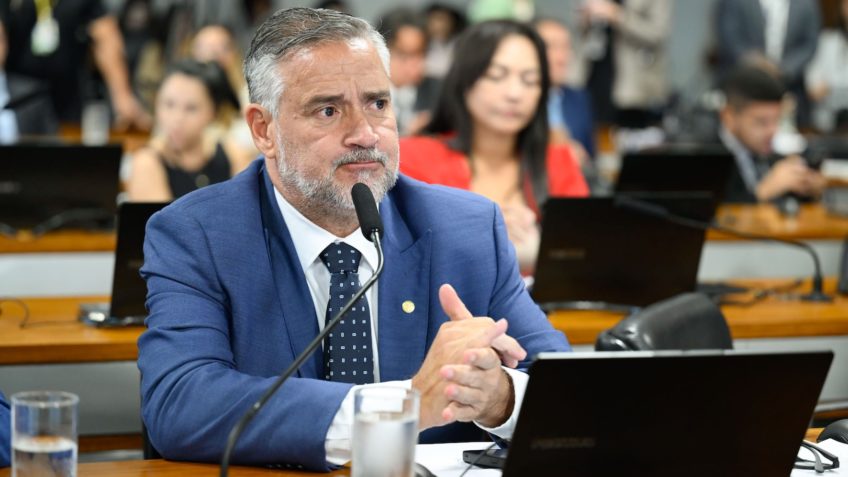
    The alternative report, which was not formally debated and voted on in the committee, was prepared by the government caucus and largely led by Deputy Paulo Pimenta (PT-RS) and Deputy Rogério Correia (PT-MG). In a video released on social media, Deputy Pimenta detailed the main points of the document. According to him:

    • The report calls for the indictment of 130 people.
    • Requests the investigation of another 71 people.
    • The document has also been forwarded to members of the Federal Police (PF), indicating the intention to drive autonomous criminal investigations.
    • Pimenta stated categorically that the report “demonstrated with evidence that this criminal scheme would never have happened if it had not found the facilities and complicity that occurred within the government of Jair Bolsonaro [PL].”
    • He further emphasized that the embezzled money is being returned, with millions already reimbursed, and promised that “this gang led by former President Jair Bolsonaro will never have the chance to commit these crimes against Brazilian men and women again.”

    The Political Maneuver and the Proposed Indictments

    The presentation of this parallel report by members of the Workers’ Party (PT) on March 27 was a deliberate political maneuver to obstruct the voting of the CPMI’s official report. The alternative text, headed by Deputy Rogério Correia, aimed not only to deepen investigations but also to significantly expand the list of investigated parties to approximately 201 names. More than that, the document focused its “political artillery” on prominent opposition figures, such as Senator Flávio Bolsonaro (PL-RJ).

    According to the PT’s position, there was a “political decision” on the part of the CPMI’s presidency to disregard the evidence presented in the alternative report. The party argues that its report contained a wide range of data and documents that would prove not only the beginning of the corruption scheme in 2017 but, crucially, its consolidation and expansion during the Bolsonaro administration.

    Among the most notorious indictments proposed by the PT in the alternative report is that of former President Jair Bolsonaro, who is pointed out as the “mastermind” behind an alleged scheme. The objective of this scheme, according to government allies, would be to finance electoral campaigns of political allies, including former Minister of Social Security Onyx Lorenzoni (PP-RS) and the current Governor of São Paulo, Tarcísio de Freitas (Republicanos). Senator Flávio Bolsonaro, son of the former president and then pre-candidate for the Presidency, also appears on the list of indictments on suspicion of money laundering.

    Significance and Next Steps

    The delivery of this alternative report to the STF marks an important point in the political and legal dispute surrounding the INSS CPMI. By not having its content voted on and recognized by the committee, the government caucus opted for a judicialization strategy, seeking that the allegations and evidence gathered be examined directly by the highest court in the country and the Federal Police. This movement may generate significant developments, potentially leading to new investigations and criminal proceedings against the figures mentioned.

    The action of the government allies reflects the existing political polarization in the National Congress and the persistent tension between the current government and the opposition. The qualification of Jair Bolsonaro as the “mastermind” of the scheme and the direct accusations against other names of his administration indicate the intention to link the failures in Social Security to an alleged criminal orchestration at the top of the previous government. This type of political-legal confrontation is common in contexts of high polarization, where the results of parliamentary investigations frequently turn into tools of dispute between the different spheres of power.

    The actions of Minister André Mendonça will be crucial to determine the future of the alternative report. He will have the responsibility of analyzing the documentation presented and deciding on the next steps, which may include forwarding it to the Attorney General’s Office (PGR) for eventual opening of inquiries or deepening of existing investigations.

    Impact for Citizens

    For the common citizen, especially INSS retirees, the CPI and its developments represent a hope for justice and recovery of embezzled values. The promise of returning the millions already reimbursed, as mentioned by Deputy Pimenta, is a positive point, but the total extent of the damages and the accountability of the true culprits are still awaited with great expectation. The integrity of the social security system, which guarantees the subsistence of millions of Brazilians, is at stake, and the transparency and effectiveness of the investigations are fundamental to restore public confidence.

    We will follow the next chapters of this complex case, which mixes politics, corruption, and the social rights of retirees and pensioners.

  • STF Restringe Aposentadoria Compulsória como Pena Máxima para Magistrados: Implicações da Reforma da Previdência

    STF Restringe Aposentadoria Compulsória como Pena Máxima para Magistrados: Implicações da Reforma da Previdência

    Reading Time: 4 minutes

    STF Restringe Aposentadoria Compulsória como Pena Máxima para Magistrados: Implicações da Reforma da Previdência

    O Supremo Tribunal Federal (STF), por meio de decisão proferida pelo ministro Flávio Dino, estabeleceu um novo marco para a aplicação de sanções disciplinares a magistrados. A partir de agora, a aposentadoria compulsória, antes considerada a pena máxima para membros do Poder Judiciário em casos de infrações graves, está restrita. Esta mudança significativa decorre das alterações impostas pela Emenda Constitucional (EC) nº 103/2019, popularmente conhecida como Reforma da Previdência, que redefiniu as possibilidades de punição para agentes públicos.

    A Decisão do Ministro Flávio Dino e as Novas Diretrizes

    A decisão do ministro Flávio Dino anulou uma determinação anterior do Conselho Nacional de Justiça (CNJ) que havia mantido a pena de aposentadoria compulsória aplicada a um juiz estadual do Rio de Janeiro. Em sua análise, o relator reconheceu que a sanção de aposentadoria compulsória, tal como aplicada previamente à reforma, foi, de fato, extinta pela EC 103/2019. Dessa forma, condutas graves que outrora justificariam essa penalidade devem agora ser punidas com a sanção mais severa de perda do cargo.

    Extinção da Aposentadoria Compulsória como Pena Disciplinar

    Com a entrada em vigor da Emenda Constitucional nº 103/2019, que visava a reestruturação do sistema previdenciário brasileiro, diversas disposições foram modificadas, incluindo aquelas que impactam diretamente o regime disciplinar de servidores públicos, incluindo os magistrados. O entendimento do ministro Dino é que a Reforma da Previdência subentendeu a supressão da aposentadoria compulsória como medida punitiva. Isso significa que, em essência, a punição branda que permitia ao magistrado infrator manter seus proventos após o afastamento compulsório, mas ainda assim percebendo remuneração proporcional ao tempo de serviço, não encontra mais respaldo jurídico pleno para condutas graves.

    Revisão Necessária e o Devido Processo Legal

    Além de destacar a inconstitucionalidade da aposentadoria compulsória como pena máxima após a EC 103/2019, o ministro Flávio Dino também apontou a violação do devido processo legal na tramitação do caso perante o CNJ. O devido processo legal é um princípio fundamental do direito que assegura a todos o direito a um julgamento justo, com a observância de todas as garantias processuais, incluindo o contraditório e a ampla defesa. A inobservância desses preceitos pode levar à nulidade de atos e decisões judiciais ou administrativas.

    Como consequência, o relator determinou que o CNJ realize uma nova análise do processo disciplinar. Nesta reanálise, o conselho deverá considerar as novas diretrizes e, caso comprove a prática de infrações graves pelo juiz, deverá encaminhar o caso à Advocacia-Geral da União (AGU). A AGU, por sua vez, terá a incumbência de propor a ação judicial cabível diretamente perante o Supremo Tribunal Federal, visando, nesse cenário, a perda do cargo do magistrado.

    O Caso Concreto: Apuração na Comarca de Mangaratiba (RJ)

    A situação que motivou a decisão do STF teve origem em uma inspeção realizada pela Corregedoria do Tribunal de Justiça do Estado do Rio de Janeiro (TJ-RJ) na Vara única da Comarca de Mangaratiba (RJ). O magistrado em questão era o titular dessa vara e foi alvo de diversas acusações de conduta imprópria e infracionária.

    Condutas Irregulares Apuradas

    As investigações e o posterior julgamento pelo TJ-RJ revelaram um padrão de comportamento incompatível com a ética e a imparcialidade que se espera de um juiz. Entre as condutas identificadas, destacam-se:

    • Direcionamento Proposital de Ações: O magistrado teria agido de forma intencional para que determinadas ações fossem distribuídas para a vara sob sua responsabilidade, o que pode configurar manipulação do sistema de distribuição de processos e favorecimento.
    • Concessão de Liminares Irregulares: Após o direcionamento das ações, o juiz concedeu liminares em benefício de policiais militares que, notavelmente, não residiam na comarca de Mangaratiba. Essa prática levanta sérias questões sobre a imparcialidade e a conformidade com as normas procedimentais, podendo indicar favorecimento indevido.
    • Retenção Indevida de Processos: Foi constatado que o magistrado retinha em seu gabinete processos cuja competência já havia sido declinada para a Fazenda Estadual. A declinação de competência é um ato processual que transfere o julgamento de um caso para outro órgão judicial considerado mais apto a decidir sobre a matéria. A retenção após essa decisão é grave, pois atrasa a tramitação dos feitos e pode prejudicar as partes envolvidas.
    • Anotação Irregular da Sigla “PM”: Ficou demonstrado que o juiz determinava a anotação da sigla “PM” (Polícia Militar) na capa de autos de processos em que policiais militares eram partes. Embora a identificação das partes seja comum, a inserção de uma sigla específica de tal forma pode ser interpretada como uma forma de sinalização ou tratamento diferenciado, comprometendo a isonomia processual.

    O Pedido de Revisão e a Manutenção da Decisão pelo CNJ

    Diante das penalidades impostas pelo TJ-RJ, o juiz apresentou um pedido de revisão disciplinar ao Conselho Nacional de Justiça (CNJ). O CNJ é uma instituição fundamental no sistema judiciário brasileiro, responsável por fiscalizar e planejar os atos do Poder Judiciário, garantindo a autonomia e o aprimoramento da prestação jurisdicional. No entanto, mesmo após a análise do recurso, o CNJ optou por manter a decisão original do TJ-RJ, que aplicava a aposentadoria compulsória como sanção. Foi essa manutenção que levou o caso ao STF e, consequentemente, à decisão do ministro Flávio Dino, que agora exige uma reavaliação sob a ótica das novas regras constitucionais.

    Impacto e Significado da Decisão do STF

    A decisão do ministro Flávio Dino é de grande relevância para o sistema judiciário brasileiro. Ela reforça a seriedade das infrações disciplinares cometidas por magistrados e alinha as punições às novas diretrizes constitucionais. Em vez de uma aposentadoria remunerada, que muitos críticos consideravam uma forma branda de punição para condutas graves, o caminho agora é a perda do cargo, uma sanção com consequências muito mais severas.

    Este movimento do STF demonstra um compromisso com a integridade e a responsabilização dentro do Poder Judiciário, enviando uma mensagem clara de que a impunidade ou a aplicação de penalidades consideradas brandas para atos de grave desvio de conduta não serão toleradas. A necessidade de reanálise pelo CNJ e o subsequente encaminhamento à AGU para uma ação de perda de cargo no STF sublinham a importância de um processo disciplinar rigoroso e transparente, em total conformidade com a Constituição Federal e os princípios do devido processo legal.

  • STF creates rules and limits ‘add-ons’ received by judges and prosecutors: See the new limits

    STF creates rules and limits ‘add-ons’ received by judges and prosecutors: See the new limits

    Reading Time: 3 minutes

    The Supreme Federal Court (STF) has established a new regulatory framework for the remuneration of magistrates and members of the Public Prosecutor’s Office, approving a transition rule that limits the so-called “add-ons” to 35% of the constitutional ceiling. The decision, which aims to bring greater transparency and containment of public spending, estimates annual savings of approximately R$ 7.3 billion to the Union’s coffers.

    The STF’s New Thesis and the Limitation of Indemnity Payments

    In a historic judgment, the Supreme Court defined that the amounts paid in addition to the monthly subsidy to members of the Judiciary and the MP cannot be unrestricted. The approved thesis establishes that these payments, often treated as indemnities, must respect the limit of 35% of the current constitutional ceiling. Currently, this limit corresponds to R$ 16,228.16, considering that the subsidy of the ministers of the Supreme Court — which serves as a ceiling for civil servants — is R$ 46,366.19.

    In addition to the percentage limit, the STF acted restrictively by prohibiting the payment of any benefit that is not expressly listed in a list defined by the Court itself. This measure aims to end the creation of new allowances through local administrative decisions that, historically, raised the remuneration of judges and prosecutors far above what is allowed by the Federal Constitution.

    Additional for Time of Service and the Impact on Final Remuneration

    Despite the imposition of limits, the judgment also brought clarity about the Additional for Time of Service (ATS). According to the decision, this additional may also be paid up to a maximum of 35% of the ceiling. In practice, this creates a remuneration structure where two distinct limits of 35% coexist. By adding the base salary with the “add-ons” and the service additional, the gross amount received by a magistrate can reach substantial figures.

    “With the sum of all authorized benefits, the total amount received by a member of the Judiciary or the Public Prosecutor’s Office may reach up to R$ 78,822.32 per month.”

    Why did the STF decide now?

    The Supreme Court justified the urgency of the measure due to the inertia of the National Congress in regulating the matter. In election years, the legislative agenda is usually reduced, and the lack of a federal law that unifies the rules of extra-ceiling remuneration allowed the continuation of regional distortions. The current rule will be valid until the Legislative Branch issues a specific rule on the matter.

    Main points of the transition rule:

    • Indemnity Ceiling: Limited to 35% of the subsidy of a STF Minister.
    • Taxative List: Only add-ons provided for in a specific list can be paid.
    • ATS: Additional for time of service maintained with its own ceiling also of 35%.
    • Expected Savings: Drastic reduction of public spending in the order of R$ 7.3 billion per year.

    National Political Scenario: Atlas/Bloomberg Survey

    While the Judiciary defines its internal rules, the political scenario for 2026 is beginning to take shape. Recent polls indicate a sharp polarization. For the first time, Senator Flávio Bolsonaro appeared numerically ahead of the current president Lula in a second-round simulation, registering 47.6% against 46.6% of the current leader.

    This technical tie reflects a growing trend of the opposition, which also presents competitiveness in scenarios involving Michelle Bolsonaro and Governor Tarcísio de Freitas. Electoral volatility and the proximity of the elections partly explain why sensitive issues such as the privileges of the public sector are at the top of the STF’s agenda.

    Digital Responsibility: Convictions of Technology Giants

    Outside Brazilian borders, Digital Law suffered a seismic impact with the judicial conviction of Google and Meta (Facebook/Instagram) in the United States. A jury in Los Angeles found the companies guilty of deliberately developing interfaces that cause addiction to social networks. The conviction focuses on persuasive design and the architecture of the platforms, and not on the content posted by third parties.

    This decision sets a global precedent for lawyers and legislators seeking to hold technology companies accountable for the psychological effects of their products. While Snapchat and TikTok sought prior agreements, Meta and Google faced the defendant’s bench, signaling that the era of immunity of “Big Techs” regarding addictive design may be coming to an end.

    Conclusion: A Balance between Efficiency and Legality

    The recent movements of the STF and the global legal scenario demonstrate a search for greater institutional control — whether over public spending and benefits of the civil service elite, or over the excessive influence of digital platforms in citizens’ lives. The 35% limit for extra benefits seeks to balance the recognition of the legal career with the administrative morality required by the taxpayer.

    For citizens and legal professionals, it remains to be seen how the National Congress will react to the STF’s provocation and whether the “transition rule” will become permanent or whether it will undergo modifications when it is finally taken to the legislative plenary.

  • Senate Approves Federal Career Restructuring with Over 24,000 New Positions, Including 13,000 for Professors

    Senate Approves Federal Career Restructuring with Over 24,000 New Positions, Including 13,000 for Professors

    Reading Time: 6 minutesReading Time: 6 minutes

    Senate Approves Comprehensive Federal Career Restructuring with Focus on Education

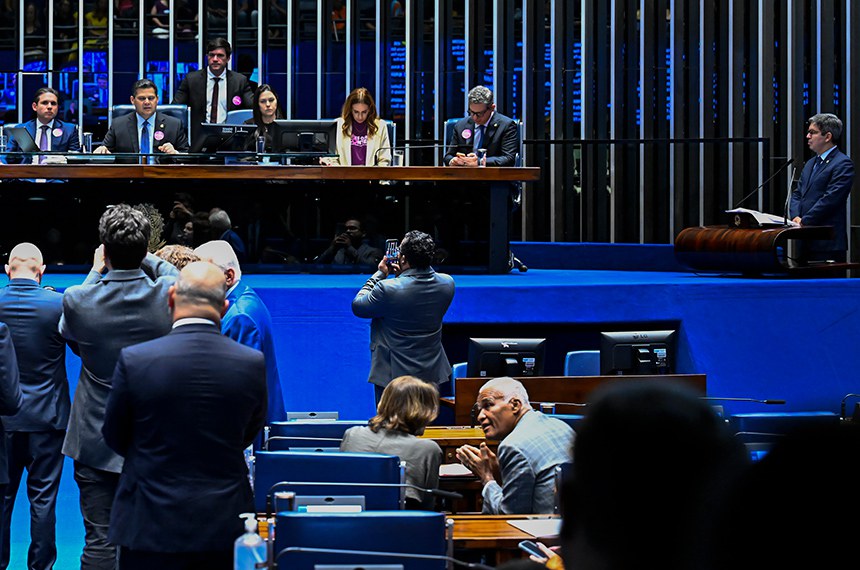
    The Plenary of the Federal Senate approved, on March 10, 2026, a bill authored by the Executive Branch that promises one of the largest restructurings of the federal public service in the country’s history.  Bill (PL) 5.874/2025 not only reorganizes and values various careers but also introduces the creation of over 24,000 new permanent positions, with a significant focus on the education sector.

    Among the most impactful provisions, the bill contemplates the creation of 3,800 new professor positions for higher education and over 9,500 for federal institutes of education, science, and technology, totaling approximately 13,000 new faculty members. In addition to the expansion of staff, the proposal innovates by establishing the direct election of rectors by the university community, institutes incentives for technical-administrative staff in education, and provides for the creation of the Federal Institute of Sertão Paraibano (IFSertãoPB). Following approval in the Senate, the text now proceeds to presidential sanction, a crucial step for its enactment into Brazilian law.

    A Milestone in the Valorization of Public Service

    The rapporteur of the bill, Senator Randolfe Rodrigues (PT-AP), government leader in the National Congress, highlighted the magnitude of the initiative, stating that approximately 270,000 federal employees will benefit in some way from the proposed changes. Attending the vote, accompanied by the President of the Chamber of Deputies, Hugo Motta, and the Minister of Management and Innovation in Public Services, Esther Dweck, Randolfe reinforced that this is the largest plan for restructuring and valorizing careers in the public service ever implemented in Brazil. He emphasized the role of President Lula’s government in the construction of the project, highlighting the commitment to democracy and the strengthening of institutions.

    During his speech, Senator Randolfe Rodrigues made a point of mentioning that the approved bill also expands the gratification functions for border compensation to various categories of civil servants. Additionally, it reopens the deadline for former Amapá civil servants to be transferred to the Union’s staff. The rapporteur, in an assertive move to ensure the project’s speed, rejected the 94 amendments proposed by senators, maintaining the integrity of the Executive’s original proposal.

    Details of the Creation of Positions and Restructurings

    The approval of PL 5.874/2025 represents a significant investment in the operational and strategic capacity of the Brazilian State. The creation of over 24,000 new permanent positions covers various areas, reflecting a demand for reinforcement and qualification in different sectors. The details of the distribution of these positions are:

    • National Health Surveillance Agency (Anvisa):

      • 200 new positions for specialist in regulation and health surveillance.
      • 25 for technician in regulation and health surveillance.
    • Federal Universities:

      • 3,800 new positions for professor of higher education.
      • 2,200 for analyst in education.
    • Federal Network of Professional, Scientific, and Technological Education:

      • 9,587 new positions for professor of basic, technical, and technological education.
      • 4,286 for technician in education.
      • 2,490 for analyst in education.
    • Ministry of Management and Innovation (MGI):

      • 750 new positions for technical analyst of socioeconomic development.
      • 750 for technical analyst of Justice and Defense.

    In addition to the creation of positions, the bill institutes the Supplementary Staff in Extinction of Systems Analyst and Data Processing in the MGI. This mechanism aims at a gradual transition, where current employees remain in their positions, but new replacements by public examination are ceased, leading to the progressive extinction of the positions as they become vacant.

    Other Crucial Measures Approved

    The bill goes beyond the creation of positions, incorporating a series of other important changes for the public service:

    Program for the Recognition of Knowledge and Skills (PRSC)

    One of the points highlighted by the rapporteur is the creation of the Program for the Recognition of Knowledge and Skills in Education. This program will benefit the technical-administrative staff working in the public network of basic and higher education, offering an additional qualification. The initiative recognizes the importance of the experience and practical knowledge of these professionals for the quality of education.

    New Tables and Expansion of Benefits

    • Remuneration: Established new remuneration tables for the positions of physician and veterinarian of the career plan of Education.
    • Culture: Amendment of the special plan of positions of Culture, seeking a valorization of the professionals of the area.
    • Tax and Customs: New remuneration tables for the tax and customs career of the Federal Revenue and Labor Tax Audit.
    • Federal Territorial Expert: Reorganization of the career of federal territorial expert.
    • Civil Defense: Possibility of working in a special regime of shifts or scales in the National Secretariat of Civil Defense, recognizing the continuous and emergency nature of its activities.
    • Compensation for Border: Expansion of the right to compensation for exercise in international border units, now including employees of the Brazilian Forest Service, ICMBio, Anvisa, and the Brazilian Intelligence Agency (Abin).

    The New Career of Technical Analyst of the Federal Executive Branch (ATE)

    One of the most significant innovations is the creation of the career of technical analyst of the Federal Executive Branch (ATE). This unified career will be formed by the transformation of 6,900 vacant positions of various administrative specialties, currently distributed by different bodies. Professionals with training in crucial areas such as administration, accounting, library science, and archival science will now integrate this single career, with allocation in the Ministry of Management and Innovation (MGI).

    The remuneration of these employees will be composed of a basic salary and the Gratification for Performance of Executive Activities (GDATE). The GDATE may reach up to 100 points, with each point valued at R$ 61.20. Its distribution will be based on individual evaluation (up to 20 points) and institutional results (up to 80 points). It is important to note that personal advantages already received by employees will be preserved, and if there is a reduction in remuneration after the migration, a Personally Identified Nominal Advantage (VPNI) will be created to compensate for the difference. With the reclassification scheduled for April 2026, the top of the career may reach approximately R$ 15,800.

    The development in the ATE career will depend on clear criteria: progression after 12 months in each standard and obtaining a minimum score in performance evaluations. Promotion between classes will require additional points, linked to the professional experience, training, and academic qualification of the employees.

    Gratifications and Special Work Regimes

    Temporary Gratification for Execution and Support

    The bill also provides for the creation of the Temporary Gratification for Execution and Support of Technical and Administrative Activities. This benefit will be destined for employees who are not linked to structured careers but who perform essential functions in various bodies of the Executive Branch. It will be limited to 4,430 gratifications for higher-level positions and 32,550 for intermediate-level positions, guaranteeing financial recognition to these workers.

    On-Call and Alternate Shift Regimes

    The legislation also regulates the possibility of adopting on-call or alternate shift regimes for federal employees whose activities demand continuous provision of services. This will allow the implementation of differentiated work schedules, such as six-hour daily shifts or on-call regimes for services that operate 24 hours. For employees of the central body of the National System of Protection and Civil Defense, the text authorizes workdays exceeding eight hours in contexts of monitoring, prevention, and response to disasters, recognizing the criticality of their functions.

    Administrative Simplification and Valorization

    Medical Evaluation by Telemedicine

    A modern and pragmatic administrative change is the authorization for the performance of medical-expert examinations by telemedicine or documentary analysis. This measure aims to simplify the medical evaluation procedures of public employees, optimizing resources and time. In addition, the bill readjusts the remuneration of the positions of physician and veterinarian in the Career Plan of Technical-Administrative Positions in Education, reinforcing the valorization of these professions.

    Readjustments for Tax Auditors

    The PL also incorporates provisions resulting from salary negotiations with careers in the federal public service. For the tax auditors of the Federal Revenue and Labor, for example, the text provides for a readjustment of 9.22% in the last class of the career. The efficiency and productivity bonus paid to these employees may reach approximately R$ 11,500 in 2026, with the expansion of the percentage of this bonus for retirees and pensioners with longer retirement time, ensuring equity and recognition.

    Democratization of University Management: Elected Rectors

    One of the most anticipated changes, and one that reflects a significant democratic advance, is the modification in the process of choosing rectors of federal universities. The current rules allow that, after consultation with the university community, the institutions forward a three-name list to the federal government, and the President of the Republic can choose any of the names. The approved text eliminates the requirement of the three-name list, determining that the indication of the rector should directly reflect the result of the internal consultation. This change empowers the academic community and strengthens university autonomy.

    Budgetary Impact

    The measures contained in the bill, which involve the restructuring of careers, creation of positions, and readjustments, will have a considerable budgetary impact. According to government estimates, this impact is approximately R$ 4.16 billion in 2026, followed by R$ 5.6 billion in 2027 and 2028. An investment that reflects the priority given to the modernization and valorization of the federal public service.

    Final Considerations

    The approval of PL 5.874/2025 by the Federal Senate is a decisive moment for the Brazilian public service. It represents a continuous effort to modernize, valorize, and strengthen federal institutions, with a special focus on education, a fundamental pillar for the country’s development. The expectation now focuses on the presidential sanction so that these important changes become a reality for thousands of employees and for the Brazilian population.