
Category: Traffic and Transportation

  • New Driver’s License (CNH): The End of Immediate Disapproval and New Rules for Driving Tests in Brazil

    New Driver’s License (CNH): The End of Immediate Disapproval and New Rules for Driving Tests in Brazil

    Reading Time: 3 minutes

    Reading Time: 4 minutes

    New Driver’s License (CNH): The End of Immediate Disapproval and New Rules for Driving Tests in Brazil

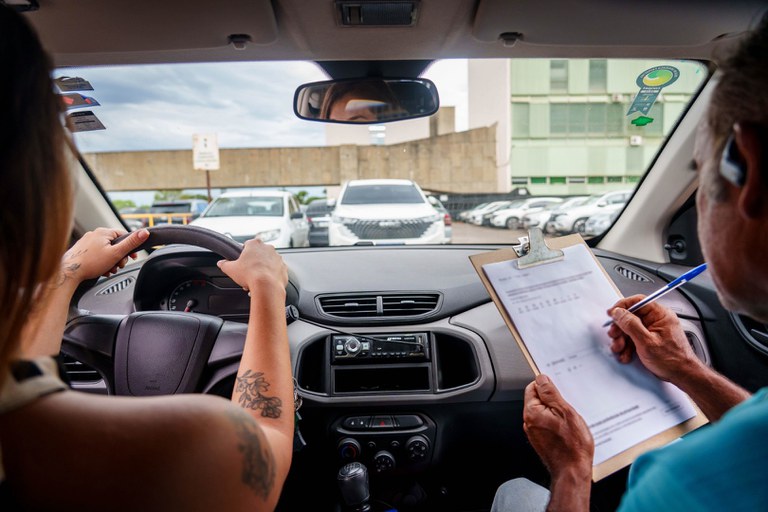
    The regulations for obtaining a National Driver’s License (CNH) in Brazil have undergone substantial changes, aiming to make the evaluation process more aligned with the reality of traffic and fairer to candidates. One of the most impactful changes is the end of immediate disapproval in practical driving tests, replaced by a scoring system based on the severity of infractions. In addition, the theoretical exam has been standardized throughout the national territory.

    The São Paulo State Department of Transit (Detran-SP), like other state Detrans, has adapted its evaluation procedures to fully align with the criteria established by Contran Resolution No. 1,020/2025. This resolution represents a milestone in the regulation of driving tests, seeking greater uniformity and objectivity.

    Changes to the Practical Driving Test: Scoring by Infractions

    The main novelty in the practical exam is the abolition of automatic disqualifying faults. Previously, certain conducts resulted in the immediate disapproval of the candidate, regardless of the rest of their performance. Now, a scoring system has been implemented, where each error or inappropriate conduct corresponds to negative points, following the logic of traffic infractions. To be approved, the candidate cannot exceed the limit of 10 negative points.

    Detailed Scoring System:

    The score assigned to faults during the practical exam reflects the severity of traffic infractions in the Brazilian Traffic Code (CTB), as follows:

    • Weight one: Corresponds to a minor traffic infraction. Examples may include adjusting mirrors with the vehicle in motion, not signaling maneuvers correctly in certain situations, or using low beams on illuminated roads during the day when not required.
    • Weight two: Corresponds to a medium traffic infraction. Among the examples, we can mention honking unnecessarily, parking in a prohibited location (but without causing serious risk), or not maintaining an adequate safety distance.
    • Weight four: Corresponds to a serious traffic infraction. This may include running a red light (with mitigating factors), not giving preference to pedestrians in crosswalks, or not using a seat belt correctly.
    • Weight six: Corresponds to a very serious traffic infraction. These are the most dangerous conducts and can result in, or come close to, reaching the permitted scoring limit. Examples may be crossing a red light without justification, not stopping at a “STOP” sign, or driving onto the sidewalk to park improperly.

    This new format seeks to simulate more realistically the conditions of circulation on public roads, encouraging future drivers to internalize the consequences of their actions in traffic. The evaluation becomes more gradual and less punitive for a single isolated error, as long as it does not constitute an imminent risk to safety.

    Updates to the CNH Theoretical Exam

    National Question Bank of Senatran

    In parallel with the changes in the practical exam, there has been a significant update to the theoretical component of the qualification process. Brazil now adopts a National Question Bank (BNQ), prepared by the National Traffic Secretariat (Senatran), which is the highest executive traffic body of the Union. This means that the theoretical qualification tests will have standardized and uniform questions throughout the country.

    The main advantages of this standardization are:

    • Greater standardization: Ensures that all candidates, regardless of the state in which they take the test, are evaluated with the same rigor and on the same programmatic content.
    • Permanent update: The National Question Bank will be continuously updated by Senatran, ensuring that the content reflects the most recent traffic laws and safe driving practices.
    • Equality in the application of the test: As emphasized by Detran, adapting to the BNQ ensures that there is parity in the tests. There are a total of 1,500 questions in the bank. Each test contains 30 questions, and to be approved, the candidate needs to get at least 20 questions right (approximately 66.7%). The selection of questions is done randomly, ensuring that each exam is unique, but with the same difficulty and breadth of topics.

    Impact of the New Rules for CNH Candidates

    For future drivers, these changes represent challenges and opportunities:

    • Greater focus on education and understanding: In the practical exam, the new methodology encourages a deeper understanding of traffic rules and their consequences, rather than just memorizing disqualifying conducts.
    • Uniformity in evaluation: Candidates in different states will now face more consistent theoretical and practical evaluations, which may facilitate the process for those who move or need to retake the exam in another location.
    • Reduction of subjectivity: The scoring criterion makes the practical evaluation more objective, reducing the margin for individual interpretations by examiners regarding less serious infractions.

    It is essential that candidates prepare adequately, studying traffic regulations and practicing driving with accredited instructors, now focusing on reducing infractions and on safe and conscious driving. Driving schools, in turn, will need to adapt their teaching methods to address these new guidelines and prepare their students for the scoring system.

    Conclusion

    The modifications implemented by Contran Resolution No. 1,020/2025 mark an important advance in the search for safer traffic and better-prepared drivers. By replacing automatic disqualifying faults with a scoring system and standardizing the theoretical exam, the qualification process approaches a more educational model and less focused on immediate punishment, encouraging more effective learning and more responsible driving.
  • Access to Driver’s License in Brazil: New Contran Rules Deregulate and Reduce Costs

    Access to Driver’s License in Brazil: New Contran Rules Deregulate and Reduce Costs

    Reading Time: 4 minutes

    Access to Driver’s License in Brazil: Contran Approves Resolution to Deregulate and Reduce Costs

    The National Traffic Council (Contran), the highest regulatory and advisory body of the National Traffic System, unanimously approved a historic resolution that promises to transform the process of obtaining a National Driver’s License (CNH) in Brazil. The changes, proposed by the Ministry of Transportation, have the main objective of democratizing access to the license, reducing costs for citizens, and modernizing procedures considered obsolete.

    This new resolution represents a significant milestone in Brazilian traffic policy, seeking to align the requirements for obtaining a license with the country’s socioeconomic reality and international best practices, without compromising road safety.

    Main Changes and Their Impacts

    The changes introduced by the resolution cover various stages of the licensing process, from theoretical to practical training, and promise greater flexibility and savings for future drivers. We detail below the most relevant points:

    1. Flexibility of the Theoretical Course (CFC A)

    One of the most anticipated innovations is the flexibility of the in-person regime for the first driver’s license theoretical course (CFC A). Previously mandatory in the classroom, the course can now be taken partly in person and partly remotely, through remote learning, as proposed by the Ministry of Transportation. This change will bring considerable benefits:

    • Cost Reduction: The partial or total offering of online classes can reduce the operating costs of Driver Training Centers (CFCs), reflecting in more affordable prices for students by eliminating expenses with travel and physical didactic material.
    • Increased Accessibility: Residents of regions with few CFCs or with difficulties accessing urban centers will have more ease in completing the theoretical workload.
    • Schedule Flexibility: Allows people with intense work or study routines to reconcile CNH training with their commitments, studying at their own pace and location.
    • Modernization: Aligns Brazil with global educational trends, which already widely use distance learning for various training programs.

    It is important to note that the modality to be adopted will be defined by the traffic executive bodies and entities of the states and the Federal District, that is, the Detrans.

    2. Simplified CNH Revalidation

    The new resolution also brings news for the revalidation of the National Driver’s License for drivers holding categories C, D, and E, who need to undergo a toxicological exam. The main changes include:

    • Elimination of the Mandatory Theoretical Course: Before, to revalidate the CNH, it was necessary to attend the theoretical classes of the recycling course, even if the driver had no history of serious infractions. With the new rule, this course will only be mandatory for those drivers who have had their right to drive suspended or who have reached the point limit on their licenses, as provided for in Art. 268, item II, of the Brazilian Traffic Code (CTB).
    • Focus on Education for Risky Drivers: By directing the recycling course to infringing drivers, the measure focuses on re-educating those who have exhibited risky behavior in traffic, freeing others from bureaucracy and unnecessary spending.

    This change aims to relieve professional drivers and other drivers of the higher categories, who need to renew their CNH more frequently and invest time and money in the exams. The expectation is that this will improve the fluidity of the revalidation process and reduce informality in transportation.

    3. Preventive Recycling Course for Category C, D, and E

    An important addition is the possibility for professional drivers (categories C, D, and E) to take the preventive recycling course. This course, which already existed for drivers of other categories who work professionally, is now reinforced and expanded, allowing these drivers to avoid the suspension of their CNH if they reach a certain point limit.

    • Suspension Prevention: The preventive course is a crucial tool for drivers who depend on the CNH to work. It allows that, upon accumulating between 14 and 19 points on the license in a 12-month period, these drivers take the course and cancel the points exceeding 14, avoiding suspension.
    • Maintenance of Professional Activity: By preventing suspension, the measure contributes to the continuity of transport activities, minimizing economic and social impacts caused by the stoppage of these professionals.

    4. Simplification in the Rehabilitation of Drivers with Revoked CNH

    Currently, a driver with a revoked CNH needs to go through the entire first-time licensing process again, including exams, theoretical and practical courses. The new resolution simplifies this return:

    • Reduction of Requirements: For the rehabilitation process, it will only be necessary to take the recycling and practical courses, in addition to the theoretical and practical exams. This eliminates the need to redo the complete first-time licensing course (CFC A), which is more extensive and costly, while maintaining the assessment of essential traffic skills and knowledge.
    • Less Bureaucracy: The measure debureaucratizes and streamlines the return of these drivers to the wheel, prioritizing updating and re-education instead of a fully repetitive process.

    Expected Consequences of the Resolution

    The proposals of the Ministry of Transportation, now endorsed by Contran, aim for a multifaceted impact:

    • Reduction of Illegality: By making access to the CNH cheaper and simpler, the expectation is to reduce the number of irregular drivers in the country, increasing legal certainty and inspection.
    • Modernization and Efficiency: The adoption of new technologies and the revision of processes contribute to a more agile licensing system adapted to contemporary needs.
    • Inclusion and Opportunity: Facilitating the obtaining of the CNH can open doors to new employment opportunities for many Brazilians, especially in a country where mobility is crucial for access to work.
    • Increased Road Safety: Although there is deregulation, the concern with safety remains central. The changes seek to optimize training and re-education, focusing on the most critical aspects of safe driving.

    Next Steps

    The resolution approved by Contran will come into effect on the date of its publication, marking the beginning of a new chapter for the licensing process in Brazil. The Detrans of each state and the Federal District must adapt to the new rules, defining the details of implementation, especially regarding the offering of remote learning and inspection. It is essential that citizens interested in obtaining or revalidating their CNH pay attention to the specific regulations of their respective states.

    This initiative demonstrates the government’s commitment to promoting public policies that directly benefit the population, making essential services more accessible and efficient.