
Tag: Social Security Law

  • Alfredo Gaspar Delivers INSS CPMI Report to the STF: 216 Indictments and New Directions in Federal Investigation

    Alfredo Gaspar Delivers INSS CPMI Report to the STF: 216 Indictments and New Directions in Federal Investigation

    Reading Time: 3 minutes

    In a significant development for the oversight of public administration and the fight against social security fraud, Federal Deputy Alfredo Gaspar (PL-AL) formally delivered the final report of the Joint Parliamentary Committee of Inquiry (CPMI) of the INSS to Ministers Luiz Fux and André Mendonça of the Supreme Federal Court (STF). The document, which has more than 4,000 pages, details a complex scheme of irregularities that directly affect the assets of retirees and pensioners throughout the country.

    The Magnitude of the Investigation and the Requests for Indictment

    The report presented by the parliamentarian from Alagoas is not just a compilation of data, but the result of months of rigorous investigations into the operation of the National Social Security Institute (INSS). In all, the text requests the indictment of 216 people, pointing to the practice of serious crimes that compromise the integrity of the Brazilian social security system.

    Among the crimes listed in the extensive document, the following stand out:

    • Qualified fraud: focused on fraud against the social security agency;
    • Criminal Organization: structured for draining public resources;
    • Money Laundering: concealment and disguise of assets originating from illicit schemes;
    • Active and Passive Corruption: involving both public agents and private entities.

    The strategic delivery to the STF ministers aims to ensure that the evidence collected by the CPMI is integrated into the federal investigations already conducted by the Federal Police (PF), under the reporting of Minister André Mendonça.

    Public Figures Under Investigation

    The political impact of the report is accentuated by the inclusion of high-profile names on the national scene. The document cites Fábio Luís Lula da Silva, the current president’s son, for an alleged connection with an individual identified as “Careca do INSS,” a character who appeared repeatedly during the committee’s testimonies and breaches of confidentiality.

    In addition, the investigation was not restricted to the current administration. Alfredo Gaspar included requests for indictment for two former Ministers of Social Security:

    1. Carlos Lupi: current holder of the portfolio in the current government;
    2. José Carlos Oliveira: who held the position in the previous federal administration.

    This temporal scope demonstrates, according to the rapporteur, that the scheme of irregularities in the INSS transcends governments, constituting a structural problem that requires an energetic response from the judicial institutions.

    The Political Scenario and Rejection in the Board

    Despite the robustness of the evidence alleged by the rapporteur, the final report faced political resistance within the CPMI itself. In a close vote, the text was rejected by 19 votes to 12. Political analysts observe that the result was a clear victory for the government base, which sought to shield names linked to the Executive.

    “The delivery of the report represents the fulfillment of duty to the Brazilian people. Even with the political rejection in the board, the facts and evidence are material and are now under the custody of the Supreme Court for due legal process.”

    It is essential to emphasize that the parliamentary rejection of a CPMI report does not invalidate its value as an informative piece for the Judiciary and the Public Prosecutor’s Office. The documentary evidence, the testimonies given under oath, and the technical expertises carried out continue to have legal value to support police investigations and criminal actions.

    The role of the Federal Police and the STF

    With the forwarding of the report to the STF, the information begins to subsidize broader investigations. The Federal Police, which was already monitoring several fronts of the benefit granting system, now has an unprecedented data crossing between the parliamentary and judicial spheres. This movement is vital to dismantle what the deputy described as a “network of pillage” that victimizes the country’s most vulnerable citizens.

    Conclusion: Next Steps and the Defense of Retirees

    The INSS CPMI ended its formal work in March 2026, but its reflections are just beginning. The focus now shifts to the technical and legal judgment of the evidence. For society and for Social Security Law, this episode reinforces the need for constant audits and more rigid corporate governance within the INSS.

    The criminal accountability of those involved, if proven, will serve as an important milestone in the fight against systemic corruption. Meanwhile, the Brazilian judicial system has the challenge of filtering political motivations and focusing on the materiality of the imputed crimes, aiming at the restitution of values and the protection of the rights of Brazilian retirees.

  • Institutional Convergence Towards the End of Premium Retirement for the Judiciary

    Institutional Convergence Towards the End of Premium Retirement for the Judiciary

    Reading Time: 3 minutesReading Time: 3 minutes

    The Brazilian legal landscape is undergoing a profound transformation regarding the disciplinary regime of the judiciary and the Public Prosecutor’s Office. The convergence between recent decisions of the Supreme Federal Court (STF) and the advancement of Constitutional Amendment Proposal (PEC) 3/2024 in the Senate signals the imminent end of the so-called “premium retirement,” an administrative sanction that, in practice, guarantees the maintenance of benefits to members of the Judiciary removed for serious misconduct or crimes.

    The End of the Sanction of Mandatory Retirement and the Understanding of the STF

    Historically, mandatory retirement with benefits proportional to length of service was the maximum penalty applicable to judges and prosecutors in administrative proceedings. However, the understanding of the legality of this measure changed drastically with the interpretation of Constitutional Amendment 103 (Pension Reform of 2019). The debate gained renewed force through a decision by Minister Flávio Dino, within the scope of Ordinary Action 2.870/DF.

    In that judgment, the minister argued that the Pension Reform suppressed the constitutional foundations that allowed the use of retirement as a disciplinary sanction. By removing the term “retirement” from the provisions governing punishments for high-ranking public officials, the derivative constituent would have expressed a clear desire to extinguish such benefit in cases of misconduct. Thus, the maximum penalty would become the definitive loss of office (dismissal), without the granting of lifetime monthly income.

    “As of the effective date of EC 103/2019, there is no constitutional basis for the State to reward with retirement benefits someone who has committed offenses incompatible with the dignity of the judiciary.”

    Analysis of PEC 3/2024: Legislative Rigor and New Rules

    Following the movement of the Judiciary, the Legislative Branch accelerated the processing of PEC 3/2024. Recently approved by the Constitution and Justice Committee (CCJ) of the Senate, the proposal aims to remedy any interpretive gap, expressly prohibiting the granting of retirement as punishment. The text provides for a restructuring of the punitive process to ensure that society does not continue to finance inactivities resulting from crimes or corruption.

    Main Innovations of the Legislative Text

    • Removal and Suspension of Remuneration: Unlike the current model, where the magistrate continues to receive salary during the administrative process, the PEC proposes the immediate suspension of payments immediately after the recognition of the serious offense.
    • Procedural Speed: Establishes a deadline of 30 days for filing the civil action aimed at the loss of office, preventing injunctions or procedural delays from perpetuating the payment of salaries to those under investigation.
    • Termination of the Bond: Dismissal becomes the rule for conduct that previously resulted in paid removal.

    The Impacts on Social Security Law and the Issue of Contributions

    The extinction of mandatory retirement as a sanction raises complex issues in the field of Social Security Law. Magistrates and members of the Public Prosecutor’s Office contribute with high rates, which can reach 14% of their income. Therefore, class associations such as AMB (Brazilian Association of Magistrates) and Ajufe (Association of Federal Judges) express concern about legal certainty and the right of ownership over the contributions made.

    Experts argue that the social security assets accumulated over decades cannot be simply confiscated by the State, under penalty of illicit enrichment of the public administration. One of the legal avenues proposed to balance administrative punishment with social security protection is the migration of contributions. In this model, the amounts paid to the Own Regime (RPPS) would be transferred to the General Regime (RGPS), allowing the punished server to use this time for a future retirement by the INSS, respecting the ceilings and rules common to all citizens.

    The Controversial Exclusion of the Military

    A point of intense controversy during the vote in the CCJ was the exclusion of the military from the text of the PEC. Currently, members of the Armed Forces expelled for crimes can leave their families the so-called “fictitious death pension,” in which the military is considered “dead” for social security purposes, allowing their dependents to continue receiving the benefit.

    The maintenance of this privilege for the military, while tightening the rule for judges and prosecutors, is seen by many jurists as a violation of the principle of equality. Defenders of the measure argue that the family should not be punished for the individual error of the military, an argument that, for critics, could be applied with the same logic to the dependents of magistrates, evidencing a lack of uniformity in the ethical-functional treatment of the State.

    Conclusion: Towards the Moralization of Public Management

    The convergence between the STF and the Senate around PEC 3/2024 reflects a social clamor for greater transparency and justice in public administration. Although the technical challenges regarding the contributory nature of social security and the guarantee of tenure still demand in-depth debates, the trend is the consolidation of a system where the severity of the functional fault is matched with the definitive loss of the prerogatives and benefits of the office.

    The text now goes to a vote in the Senate Plenary and, later, in the Chamber of Deputies. Legal professionals should remain attentive, as final approval will redefine not only administrative sanctions, but also the management of social security liabilities in the Brazilian public sector.

  • Chamber Maintains Retroactive Payments for Fishing Ban Insurance: Understand Fishermen’s Rights in 2026

    Chamber Maintains Retroactive Payments for Fishing Ban Insurance: Understand Fishermen’s Rights in 2026

    Reading Time: 3 minutes

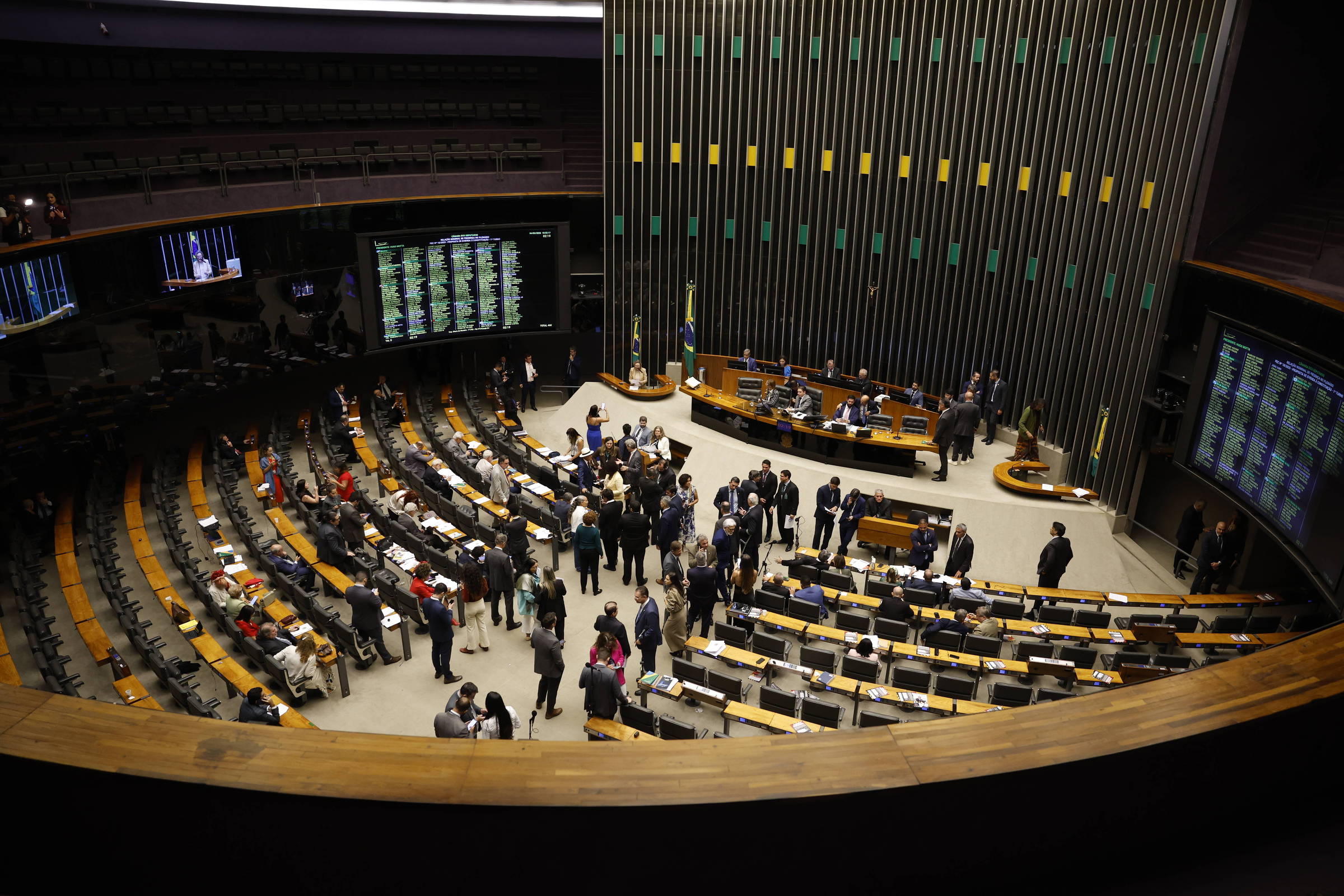
    In a decision of great impact for the national fishing sector, the Chamber of Deputies approved the maintenance of retroactive payments for fishing ban insurance, overturning the changes previously suggested by the Federal Senate. The measure ensures that artisanal fishermen maintain the right to claim amounts related to past periods, consolidating fundamental rules for the subsistence of these workers during the months when commercial fishing is prohibited.

    What is Fishing Ban Insurance and its Legal Relevance

    Fishing ban insurance, formally known as Artisanal Fisherman’s Unemployment Insurance (SDPA), is a social security benefit of an assistance nature, equivalent to a monthly minimum wage. It is paid during the “fishing ban” period, which comprises the months when fishing for certain species is prohibited to ensure reproduction and environmental sustainability.

    For the year 2026, with the minimum wage set at R$ 1,621, the benefit acts as an essential safety net. Legally, the insurance seeks to compensate for the temporary loss of income for workers who live exclusively from artisanal fishing, guaranteeing human dignity and ecological balance, both precepts protected by the Federal Constitution.

    The Legislative Dispute: Chamber vs. Senate

    The processing of the Provisional Measure (MP) that regulates the benefit was marked by intense debates between the two houses of the National Congress. While the Federal Senate sought to restrict certain points to contain the advance of public spending, the Chamber of Deputies, under the leadership of rapporteur Senator Beto Faro (PT-PA) in the special committee, defended flexibility and broader access.

    The Issue of Retroactive Payments

    The most controversial point was the maintenance of retroactive payments. The Senate had voted to exclude this possibility, aiming to limit the immediate fiscal impact. However, the deputies decided to reinstate the original text of the committee, ensuring that fishermen who did not make the request in previous years, but who demonstrably had the right, can request it now.

    “The maintenance of retroactives is a victory for the legal certainty of the artisanal fisherman, who often faces bureaucratic and geographical barriers to access their rights at the exact time of the prohibition.”

    New Registration and Inspection Rules

    In addition to the overdue amounts, the Chamber consolidated other operational rules that directly impact the beneficiary’s daily life:

    • Biometrics and CadÚnico: Biometric registration and registration in the Cadastro Único (CadÚnico) are required. However, it was defined that the income considered in CadÚnico will not be used to limit access to fishing ban insurance, with the specific nature of fishing activity prevailing.
    • Fiscal Documentation: The Chamber overturned the temporal requirement for sending documents. Previously, the government wanted proof of sale of fish for at least six months in the twelve months prior to the fishing ban. Now, only documentation is required, without this rigid time frame.
    • Digital Identification: The authentication system may be mediated by qualified public servants or accredited fishing representative entities, facilitating access for workers with technological difficulties.

    Budgetary Impact and Spending Limit

    To balance public accounts, the approved text establishes a spending ceiling for the year 2026. The total expenditure of the Union with fishing ban insurance cannot exceed the amount of R$ 7.9 billion. It is important to note that this ceiling refers to payments for the current fiscal year, not including the provisions for retroactive payments resumed by the deputies.

    The concern of the opposition in the Senate lies precisely in the possibility of fraud. It is argued that allowing representative entities to manage registrations and that retroactive payments are made without precise estimates may destabilize the public budget earmarked for fishing.

    Next Steps and Final Considerations

    With the approval in the Chamber, the bill for conversion goes to the President of the Republic for sanction. If sanctioned without vetoes, the new rules come into effect immediately, allowing thousands of fishermen to regularize their situation before the Ministry of Fisheries and Aquaculture and the Ministry of Labor and Employment.

    For the artisanal fisherman, the moment is to pay attention to the documentation. The requirement of biometrics and the update in CadÚnico become indispensable. It is recommended that workers seek their colonies or specialized legal advice to ensure that the retroactive request, if applicable, is properly instructed with the necessary proofs of professional activity.

    In conclusion, the Chamber’s decision prioritizes the social protection of the fisherman to the detriment of an immediate fiscal restriction, recognizing the historical difficulties of access of this public to public assistance and social security policies.

  • STF suspends proceedings on equal contribution time for men and women in supplementary pension plans

    STF suspends proceedings on equal contribution time for men and women in supplementary pension plans

    Reading Time: 3 minutes

    The Federal Supreme Court (STF) has just ordered the national suspension of all proceedings discussing the legality of clauses in supplementary pension plans that establish the same contribution time for men and women. The decision, which occurs under the general repercussion procedure, highlights the conflict between formal equality and material justice in the Brazilian private pension system.

    The Decisive Framework: General Repercussion Theme 1.423

    The decision was consolidated in the judgment of Extraordinary Appeal (RE) No. 1,415,115. By recognizing the existence of general repercussion to the matter, now cataloged as Theme 1.423, the STF signals that the resolution of this conflict will not only impact the parties involved in the original process, but thousands of pension fund beneficiaries across the country.

    The rapporteur of the case, Minister Alexandre de Moraes, emphasized the need to halt the ongoing actions in the lower courts. This national suspension is a strategic procedural tool to prevent different courts from issuing conflicting decisions, which could generate extreme legal uncertainty for supplementary pension entities and their participants.

    The Controversy: Equality of Time vs. Social Reality

    The core of the dispute lies in pension fund regulations that require 30 years of full contribution for both men and women. The plaintiffs argue that applying a “one-size-fits-all” rule for both genders ignores the historical and structural disparities of Brazilian society.

    Historically, the General Social Security Regime (RGPS/INSS) and the Special Regime (RPPS) adopt differentiated criteria. This differentiation is based on widely documented sociological and economic assumptions:

    • Double workload: The recognition that women still assume the greater burden of domestic and family care.
    • Wage inequality: IBGE data proving that women, on average, earn less than men in the same roles.
    • Barriers in the labor market: The penalization of maternity in career progression.

    The Logic of Distortion in Supplementary Plans

    One of the most sensitive points of the discussion refers to the nature of “supplementation”. If women retire with reduced time in the INSS, but the supplementary plan requires 30 years for the maximum benefit, there is a financial mismatch. Many women have to choose between continuing to work only to reach the private pension goal or retiring through the INSS and receiving a reduced (proportional) supplementary allowance.

    “The application of an identical contribution time criterion in supplementary systems can, paradoxically, deepen the inequality that the public pension system tries to mitigate, punishing women for a rule that does not observe their structural vulnerability.”

    Formal Equality vs. Material Equality

    The judgment in the STF should revisit fundamental concepts of Constitutional Law:

    1. Formal Equality

    From this perspective, everyone is equal before the law and should be subject to the same rules. Supplementary pension entities often argue that, because they are voluntary and based on rigorous actuarial calculations, they should not suffer the same interference from social policies as the public regime.

    2. Material (Substantial) Equality

    This concept argues that the Law must treat the unequal to the extent of their inequality. Treating people who face different realities in the labor market in the same way would, ultimately, consolidate an injustice.

    Actuarial and Financial Impacts

    Private pension entities express concern about the actuarial balance of the plans. If the STF decides that the contribution time for women should be less, the calculations of mathematical reserves and monthly contributions may need to be revised. This could increase the cost of the plans or require extraordinary contributions from sponsors and participants.

    On the other hand, participants argue that the financial sustainability of the fund cannot be maintained at the expense of violating fundamental rights and constitutional principles of equality.

    What to expect for the future of the proceedings?

    With the national suspension in effect, all proceedings in the Brazilian Judiciary on this issue will be halted until the STF Plenary issues a final decision. There is no exact date for this judgment, but given the nature of the general repercussion, the fixed thesis must be followed by all judges and courts in the country.

    Conclusion

    The outcome of Theme 1.423 will be a watershed for Brazilian Pension Law. It will define whether the autonomy of closed supplementary pension entities has limits before the principle of gender equality. While we await the decision, the recommendation for beneficiaries and lawyers is to rigorously monitor the procedural updates, as any retroactive or modulated decision may drastically alter the retirement planning of thousands of Brazilian women.

  • Justice defines that Social Security Courts must judge special pension requests for femicide orphans

    Justice defines that Social Security Courts must judge special pension requests for femicide orphans

    Reading Time: 3 minutes

    The Regional Uniformization Panel of the Federal Special Courts of the 4th Region (TRU/JEFs) has consolidated a fundamental understanding for the social protection of minors in situations of extreme vulnerability: the competence to process and judge requests for special pensions for femicide orphans belongs to the Federal Courts with social security or welfare specialization. The decision, which standardizes the interpretation of Law 14.717/2023, removes the judgment from the common Civil Courts, ensuring that magistrates familiar with the Social Security system analyze the demands of these dependents.

    The Legal Nature of the Benefit and Law 14.717/2023

    To understand the TRU4’s decision, it is necessary to analyze the origin and purpose of Law 14.717/2023. This legal diploma was established to offer immediate financial support to the children and dependents of women victims of femicide, seeking to mitigate the devastating impact that this crime causes on the family nucleus and the development of the children and adolescents involved.

    Although it is technically called a “pension”, the legal nature of this benefit is not social security stricto sensu, but rather welfare. Unlike the common death pension, which requires the deceased insured to be contributing to the INSS, the special pension for femicide orphans is independent of the victim’s prior contributions. The focus is on socioeconomic vulnerability and the tragic fact of the crime.

    “The special pension for femicide orphans has an umbilical relationship with social assistance, resembling in operational and budgetary terms the Continuous Benefit (BPC/LOAS).”

    The Concrete Case: The Conflict of Jurisdiction

    The legal debate gained momentum after a conflict of jurisdiction raised by the 2nd Federal Court of Passo Fundo (RS). In the case in question, the legal guardian of three children (aged between two and seven years), whose mother was a victim of femicide committed by the children’s own father in 2024, filed the action after an administrative denial by the INSS.

    The social security entity had rejected the benefit claiming that the mother did not have “insured status” on the date of death. However, when analyzing the case, the magistrates observed that the requirement of insured status is a criterion for contributory social security benefits, while the new law only requires that the per capita family income is equal to or less than a quarter of the minimum wage.

    Why were the Social Security Courts chosen?

    The choice for the Social Security and Welfare Courts was not arbitrary. The TRU4 collegiate, under the rapporteurship of federal judge Oscar Alberto Mezzaroba Tomazoni, based the decision on three essential technical pillars:

    • Operationalization by the INSS: The law expressly assigns to the National Social Security Institute the responsibility to manage, analyze and pay the benefit.
    • Source of Funding: The payment comes from the Social Security budget, specifically from the item destined for social assistance, according to article 3 of Law 14.717/2023.
    • Selectivity Criterion: As in the BPC, the concession is linked to income and vulnerability criteria, technical expertise that social security judges have in their judicial routine.

    Impacts for Advocacy and for Society

    This decision brings significant legal certainty for lawyers working in the area. Filing the action in the correct court from the beginning avoids procedural annulments, declinations of jurisdiction and, consequently, unjustified delays in the delivery of a benefit that has an urgent food character.

    In addition, the specialization of social security judges allows a more sensitive and technical analysis of the concepts of family nucleus and misery. For the beneficiary children, this means that the Judiciary is structured to respond with the speed that the situation of orphanhood requires.

    Requirements for the concession of the special pension

    It is important to highlight the legal requirements that must be proven in these actions before the Social Security Courts:

    1. Death by femicide: Proof that the mother’s death resulted from a gender crime, under the terms of criminal law.
    2. Age: The beneficiary must be under 18 years of age on the date of death.
    3. Family Income: The monthly per capita income of the family group must be up to 1/4 of the minimum wage.
    4. Prohibition of Accumulation: The benefit cannot be accumulated with pensions from social security regimes (RPPS or RGPS).

    Conclusion

    The pacification of this understanding by the TRU4 reinforces the protective character of the Brazilian Social Security system. By directing femicide orphans to the Federal Social Security Justice, the court recognizes that the State must act in an integrated manner, using its most robust structure of welfare analysis to support those who lost their providers in contexts of extreme violence.

    The decision now serves as a guideline for the entire South of the country and as a relevant precedent for other federal regions, ensuring that the Law is an instrument of reparation and survival for the collateral victims of domestic violence.

  • STF Restringe Aposentadoria Especial para Vigilantes: Entenda a Decisão

    STF Restringe Aposentadoria Especial para Vigilantes: Entenda a Decisão

    Reading Time: 4 minutes

    Entenda a Decisão do STF sobre a Aposentadoria Especial de Vigilantes

    O Supremo Tribunal Federal (STF) proferiu uma decisão de grande impacto para a categoria dos vigilantes, ao formar maioria para restringir o direito à aposentadoria especial. Em um julgamento que terminou com um placar de 6 a 4, os ministros da Corte Suprema acolheram o voto divergente do Ministro Alexandre de Moraes, estabelecendo novos parâmetros para a concessão deste benefício previdenciário.

    A aposentadoria especial é um benefício concedido a trabalhadores que exercem atividades consideradas insalubres, perigosas ou penosas, nas quais são expostos a agentes nocivos à saúde ou à integridade física de forma habitual e permanente. O objetivo é compensar o desgaste físico e mental acelerado por essas condições, permitindo uma aposentadoria mais precoce com requisitos diferenciados de tempo de contribuição.

    O Cenário Anterior e a Expectativa dos Vigilantes

    Historicamente, a profissão de vigilante, pela sua própria natureza, que envolve a proteção de patrimônio e pessoas, muitas vezes com porte de arma e exposição a situações de risco iminente, era reconhecida como atividade perigosa. Esse reconhecimento embasava a concessão da aposentadoria especial, que permitia aos profissionais se aposentarem com um tempo de contribuição menor do que o exigido para as aposentadorias comuns.

    A discussão no STF girava em torno da constitucionalidade e dos critérios para a concessão desse direito. A expectativa de muitos vigilantes era de que a Corte mantivesse ou até ampliasse o reconhecimento da natureza especial da atividade, dadas as condições de trabalho intrínsecas à profissão.

    O Voto Divergente do Ministro Alexandre de Moraes

    O desfecho do julgamento foi marcado pela aceitação majoritária do voto divergente apresentado pelo Ministro Alexandre de Moraes. Embora o detalhamento completo de sua tese ainda precise ser explorado para uma compreensão aprofundada das nuances da decisão, o apoio de outros cinco ministros (totalizando 6 votos favoráveis à sua proposta) indica uma virada jurisprudencial significativa.

    Geralmente, um voto divergente em casos de grande repercussão como este propõe uma interpretação distinta daquela inicialmente apresentada pelo relator ou em votos precedentes. No contexto da aposentadoria especial para vigilantes, a tese vencedora provavelmente se aprofunda em aspectos como:

    • Exigência de prova efetiva da exposição ao risco: Pode ser que a simples classificação da profissão não seja mais suficiente, exigindo-se a comprovação individualizada e contínua do risco ou da periculosidade através de documentos técnicos, como o Perfil Profissiográfico Previdenciário (PPP).
    • Revisão dos critérios de periculosidade: O voto pode ter redefinido o que se entende por "periculosidade" para fins previdenciários, estabelecendo parâmetros mais rigorosos ou específicos que os vigilantes deverão atender.
    • Análise da data de início da atividade: Em algumas discussões sobre regimes previdenciários, a data em que a atividade especial foi exercida (antes ou depois de determinadas reformas) pode influenciar a aplicação das regras.

    Como a Maioria Foi Formada

    O placar de 6 a 4 na votação é crucial, pois demonstra a divisão da Corte em relação ao tema. O voto do Ministro Alexandre de Moraes, que se tornou majoritário, foi seguido por outros ministros que compartilham de uma visão mais restritiva ou técnica sobre a concessão de benefícios previdenciários especiais, alinhando-se possivelmente a uma interpretação mais cautelosa dos impactos fiscais e da sustentabilidade do sistema previdenciário.

    Os ministros que formaram a maioria ainda não tiveram seus nomes explicitamente divulgados no HTML fornecido, mas a composição indica uma tendência de rigor na análise de benefícios especiais, buscando um equilíbrio entre o direito social do trabalhador e a capacidade financeira do Estado.

    Implicações da Decisão para os Vigilantes

    A decisão do STF terá profundas implicações para os vigilantes em todo o Brasil. As principais consequências podem incluir:

    1. Novos Critérios para Concessão: Aqueles que buscam a aposentadoria especial precisarão se adequar aos critérios estabelecidos pelo STF, que podem ser mais exigentes do que os anteriormente praticados.
    2. Impacto em Processos em Andamento: Processos judiciais que estavam aguardando a definição do Supremo deverão ser julgados conforme a nova tese. Vigilantes com ações em curso podem ter suas expectativas alteradas.
    3. Planejamento Previdenciário: Os profissionais da área deverão revisar seu planejamento previdenciário, considerando a necessidade de um tempo de contribuição maior ou de diferentes provas para reconhecimento da condição especial.
    4. Potencial para Modulação dos Efeitos: É comum em decisões de grande impacto do STF que haja uma modulação dos efeitos, ou seja, a definição de a partir de quando a nova regra passa a valer. Isso pode preservar direitos adquiridos ou situações em que os requisitos foram cumpridos sob a legislação anterior. No entanto, o texto original não detalha se houve tal modulação.

    O Papel do Escritório de Advocacia

    Diante desta nova realidade jurídica, a orientação especializada torna-se ainda mais essencial. Um escritório de advocacia especializado em direito previdenciário pode auxiliar os vigilantes a:

    • Analisar a Situação Individual: Avaliar os documentos de cada profissional para verificar se os novos requisitos para a aposentadoria especial podem ser preenchidos.
    • Entender a Tese do STF: Oferecer clareza sobre os pormenores da decisão, explicando a interpretação do STF sobre a periculosidade e os critérios de prova.
    • Orientar sobre Documentação: Ajudar na obtenção e organização dos documentos necessários para comprovar a atividade especial, como o PPP, laudos técnicos, LTCAT (Laudo Técnico das Condições Ambientais de Trabalho), entre outros.
    • Representação Legal: Defender os direitos dos vigilantes em processos administrativos junto ao INSS ou em ações judiciais, buscando a melhor aplicação da lei e da jurisprudência em cada caso.
    • Replanejamento Previdenciário: Auxiliar na elaboração de um novo plano de aposentadoria, considerando as alterações trazidas pela decisão do STF.

    Considerações Finais

    A decisão do STF sobre a aposentadoria especial dos vigilantes, publicada em 14 de fevereiro de 2026, representa um marco importante para o direito previdenciário no Brasil. Embora o resultado possa gerar frustração em parte da categoria, é fundamental que os trabalhadores busquem informações precisas e assessoria jurídica qualificada para compreender plenamente o alcance da medida e planejar seus próximos passos com segurança.

    A complexidade das regras previdenciárias, somada às constantes alterações jurisprudenciais e legislativas, reforça a necessidade de acompanhamento profissional constante para garantir a proteção dos direitos dos trabalhadores.